Management Systems World
All on Quality and other Standards in one place since 2010. Now Worldwide.
News European Union
Please note that you have to be a registered member with paid membership in order to see full articles.
RegisterSelected News

AFNOR Event Brings Together Financial Organizations Holding ‘Committed to CSR’ Label
The French Association for Standardization (AFNOR) brought together financial organizations holding its ‘Committed to CSR’ label during a national meeting in Paris focused on sustainability reporting,
NEN Seeks Members for Flexible, Demountable Infrastructure Standards
The Netherlands Standardization Institute (NEN) is seeking members for new working groups that will further develop three Dutch Technical Agreements (NTAs) related to industrial, flexible, and demountable (IFD) infrastructure construction methods.
Rhum Bologne First Distillery in Guadeloupe to Earn ISO 22000 Certification
Rhum Bologne, a rum distillery in the French Caribbean territory of Guadeloupe, has received ISO 22000 certification for its food safety management system, becoming the first distillery on the island to achieve the certification.
ISO 14001:2026 and Autonomous Transport Lead May Issue of PKN News
The Polish Committee for Standardization (PKN) has released the May 2026 issue of PKN News, focusing on how standards are helping organizations and public systems respond to fast-changing technological and environmental challenges.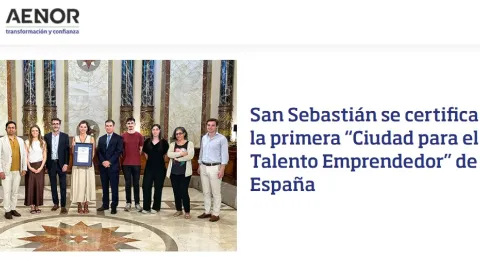
San Sebastián Becomes First Spanish City Certified for Entrepreneurial Talent
AENOR, a Spanish standards and conformity assessment organization, has certified San Sebastián as the first “City for Entrepreneurial Talent” in the country,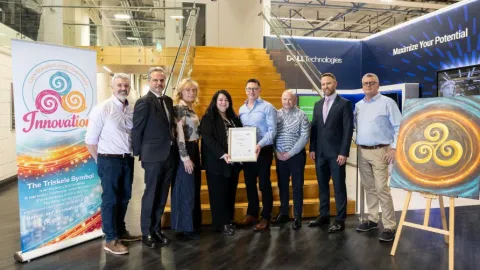
Dell Technologies First in Ireland to Earn ISO 56001 Certification
The National Standards Authority of Ireland (NSAI) announced that Dell Technologies has become the first organization in the country to earn ISO 56001 certification for innovation management systems.
Lamborghini Recognized for Environmental, Social and Governance Practices
Automobili Lamborghini has received ESG Recognition from DNV, for using certified management systems to support its environmental, social, and governance commitments.
Polish Accreditation Centre Opens CBAM Verification Program
The Polish Accreditation Centre (PCA) has launched a new accreditation process for bodies that verify emissions data under the European Union’s Carbon Border Adjustment Mechanism (CBAM).
‘Day of ÚNMZ and ČAS’ Conference Highlights Data and Digitalization in Cities and Construction
The Czech Office for Standards, Metrology and Testing (ÚNMZ) and the Czech Standardization Agency (ČAS) held the “Day of ÚNMZ and ČAS” conference in Prague on May 14,
Accredia Passes EA Peer Evaluation for Biobanking Accreditation
The Italian accreditation body Accredia has passed a peer evaluation by the European co-operation for Accreditation (EA), advancing the process for international recognition of Italian biobank accreditations under ISO 20387.
Sustainable Mobility Anchors UNE Magazine’s May 2026 Edition
The Spanish Association for Standardization (UNE) has released the May 2026 edition of UNE Magazine,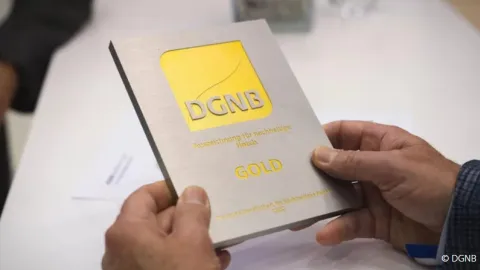
Kristalna palača Becomes First Building in Slovenia to Earn DGNB Gold Certificate
Kristalna palača in BTC City Ljubljana became the first building in Slovenia to receive a DGNB Gold certificate for sustainable buildings in use from the German Sustainable Building Council (DGNB).Global News
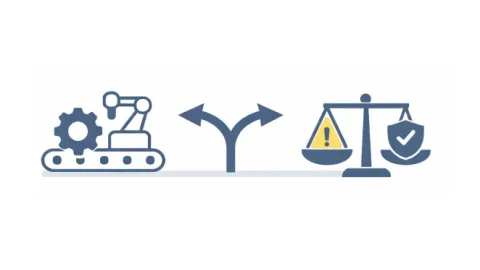
ISO 12100 Machinery Safety Revision Stalls Over Risk Definition Dispute
The revision of ISO 12100, the core standard for machinery safety, remains unresolved following a negative international vote, with key disagreements, including on alignment with EU requirements.
Sweden Introduces CBAM Accreditation for Emissions Verifiers, Reflecting Broader Global Shift in Climate Data Assurance
The Swedish Board for Accreditation and Conformity Assessment (SWEDAC) has introduced a new accreditation area for organizations verifying emissions data under the
Youth Leadership Program Opens Applications For 2026–2027 Environmental Cohort
Applications are now open for the third cohort of the Environmental Management Youth Leadership Group (YLG 3.0), an initiative of the International Organization for Standardization (ISO).
PEFC Opens Nominations For Forest Management Working Group Seats
The Programme for the Endorsement of Forest Certification (PEFC) is inviting nominations for its Sustainable Forest Management Working Group, with submissions open until April 22, 2026.
"Global Standard" Opens Second Consultation On Responsible Textile Standard GRTS
Global Standard has opened a second public consultation on Draft 2 of the Global Responsible Textile Standard (GRTS),
DIN SPEC 14027 Establishes First Comprehensive Framework for Corporate Security
The German Institute for Standardization (DIN) has published DIN SPEC 14027,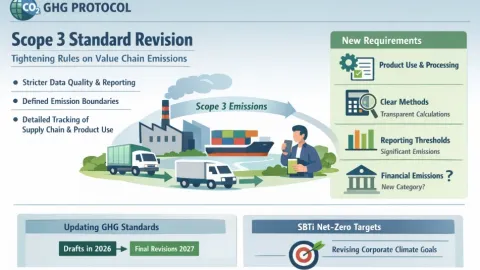
GHG Protocol Begins Scope 3 Revision Tightening Data and Measurement Rules
The Greenhouse Gas Protocol (GHG Protocol) has launched a major revision of its Scope 3 standard,
ISO 17020 Third Edition Published With Risk-Based Approach
A new edition of ISO/IEC 17020 has been published, introducing updated requirements for inspection bodies and replacing the 2012 version after a technical revision.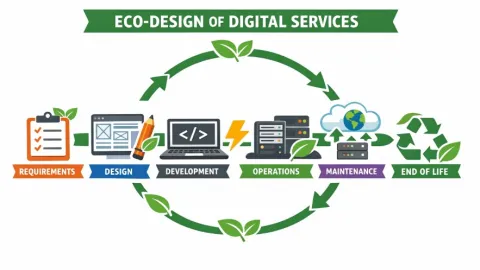
ISO TS 20125-1 for Eco-Design of Digital Services Released
The International Organization for Standardization (ISO) and the International Electrotechnical Commission (IEC) have published ISO/IEC TS 20125-1:2026,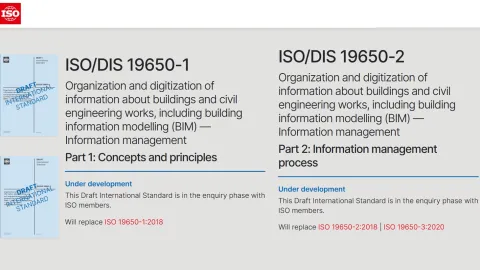
ISO 19650 Parts 1 and 2 on Information Management in BIM Projects Open for Consultation
The International Organization for Standardization (ISO) has opened a public consultation on proposed changes to ISO 19650 Parts 1 and 2,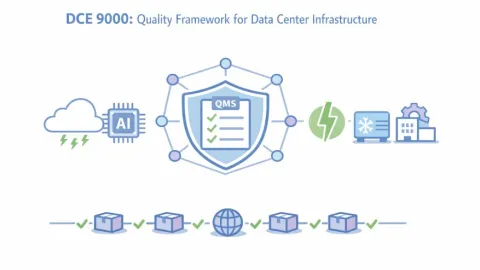
TIA Develops First Data Center Infrastructure Quality Standard DCE 9000
The Telecommunications Industry Association (TIA) is developing DCE 9000, the first quality management system (QMS) standard specifically designed for modern data center physical infrastructure, with publication and certification planned for 2027.