Management Systems World
All on Quality and other Standards in one place since 2010. Now Worldwide.
News South America
Please note that you have to be a registered member with paid membership in order to see full articles.
RegisterSelected News
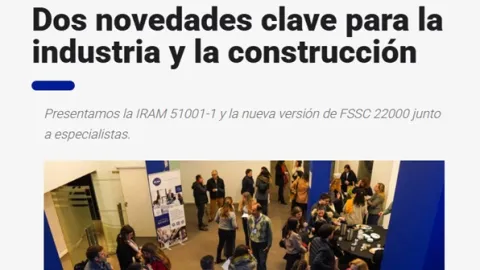
IRAM Launches Argentina's First Steel Framing Standard and Presents FSSC 22000 Version 7
The Argentine Institute for Standardization and Certification (IRAM) launched Argentina's first national standard for Steel Framing construction systems and hosted a separate event introducing Version 7 of the FSSC 22000 food safety certification scheme.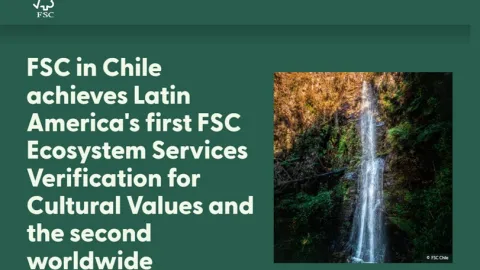
FSC in Chile Celebrates Latin America's First Cultural Values Verification
The Forest Stewardship Council (FSC) has announced Latin America's first and the world's second FSC Ecosystem Services Verification for Cultural Values, covering the Hueima Waterfall in Chile's Los Ríos Region.
Lina Araceli González Morales Wins Inaugural IAAC Women Leader Award
The Inter-American Accreditation Cooperation (IAAC) has presented its first Women Leader in Accredited Conformity Assessment Award to Lina Araceli González Morales, director of operations at FACTUAL SERVICES S.C.
COAR Junín High School to Represent Peru at International Standards Olympiad
The National Institute of Quality (INACAL) has announced that Yachay Warriors, a student team from COAR Junín High School, will represent Peru at the 21st International Standards Olympiad in South Korea after winning the National Standards Olympiad 2026.
Alexandre Garrido Receives ISO Excellence Award for Sustainable Tourism Standards Leadership
Alexandre Garrido has received an ISO Excellence Award in recognition of his outstanding leadership and contributions to ISO/TC 228, including his role as project leader of ISO 18060:2026.
Peru Adopts ISO 9000:2026 as National Standard
The National Institute of Quality (Inacal) has adopted ISO 9000:2026 as the Peruvian standard NTP-ISO 9000:2026, aligning the country with the latest international update in quality management and supporting organizations as they prepare for ISO 9001:2026.
Córdoba Event Maps Quality Infrastructure Needs for Circular Economy
The Center of Excellence on Innovation and Transformative Technologies for the Circular Economy (CEITTEC) hosted a regional meeting in Córdoba, Argentina,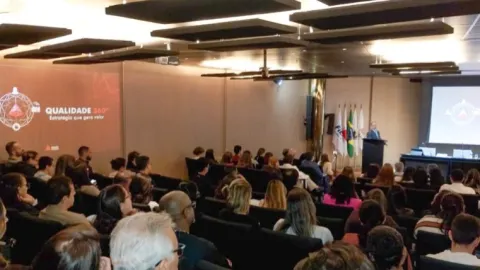
Quality 360º Event Showcases Inmetro Digital Initiatives
The National Institute of Metrology, Quality and Technology (Inmetro) presented new digital services, online fraud monitoring initiatives and professional training programs at the Quality 360º – Strategy That Generates Value event in Belo Horizont.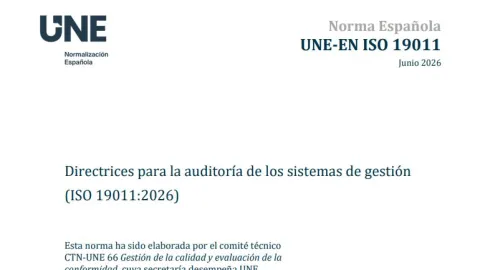
ISO 19011:2026 Translated and Adopted in Spain
The auditing standard ISO 19011:2026 has been translated into Spanish and adopted in Spain as UNE-EN ISO 19011:2026.
BRCGS Seeks Nominations for 2026 Americas Awards
Nominations are now open for the BRCGS Awards 2026 Americas, which recognize individuals and organizations that support BRCGS certification and contribute to food and product safety across the region.
São Paulo Event Highlights Progress in Brazil Green Seal Certification Program
The Brazilian Association of Technical Standards (ABNT) joined government, industry and certification representatives in São Paulo for an event highlighting progress in Brazil's Green Seal Program (Selo Verde), a national initiative aimed at certifying sustainable products and services.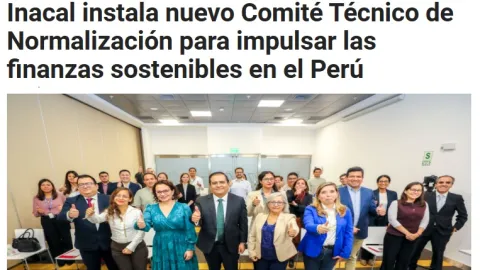
Peru Launches Sustainable Finance Standards Committee
The National Institute of Quality (INACAL) has established a new technical standardization committee on sustainable finance to develop national standards that support sustainable investment and financing practices in Peru.Global News
Global ACI Sets Three-Year Transition Timelines for ISO 14001:2026 and ISO 9001:2026
Global Accreditation Cooperation Incorporated (Global ACI) has set three-year transition periods for accredited certification to ISO 9001:2026 and ISO 14001:2026 , ending September 30, 2029 and April 30, 2029, respectively.
China Approves World’s First Medical Device Standard for AI Brain-Computer Interfaces
China has approved YY/T 2029-2026, the world’s first medical device standard for brain-computer interfaces (BCIs) that use artificial intelligence (AI).
IFS Makes EU Packaging Rules Self-Assessment Tool Available After 70-Company Pilot
International Featured Standards (IFS) has made its self-assessment tool for the EU Packaging and Packaging Waste Regulation (PPWR) available in the IFS Database after a pilot involving 70 companies.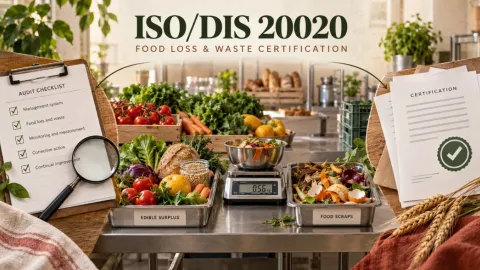
Comment Open on ISO/DIS 20020 for Bodies Auditing and Certifying Food Loss and Waste Management Systems
Comments are open on ISO/DIS 20020, a draft standard setting requirements for bodies that audit and certify food loss and waste management systems (FLWMS).
ISO Begins Developing IWA 52 to Harmonize Transport GHG Emission Factors
The International Organization for Standardization (ISO) is developing IWA 52 to harmonize how greenhouse gas (GHG) emission factors are calculated for transport.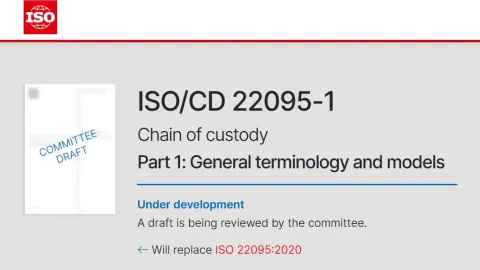
ISO 22095-1 Chain of Custody Revision Reaches Committee Draft Stage
ISO 22095-1 has reached the Committee Draft stage, moving the revision of the general chain of custody framework into formal consultation.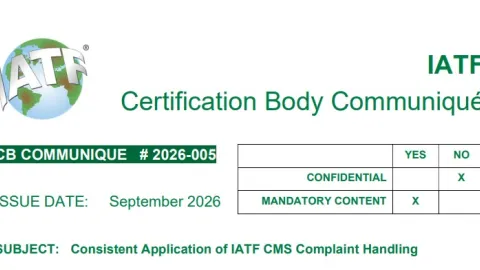
IATF Clarifies Complaint Handling for Certification Bodies
The International Automotive Task Force (IATF) has issued new guidance for certification bodies on handling vehicle manufacturer performance complaints through the IATF Complaint Management System (IATF CMS).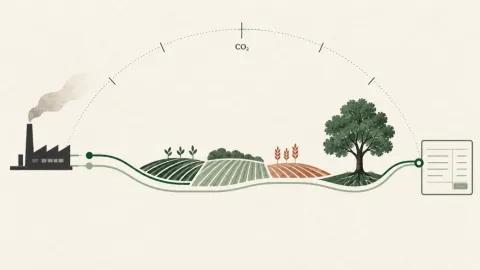
How SBTi and GHG Protocol Updates Expand Options for Corporate Emissions Accounting
Changes from the Science Based Targets initiative (SBTi) and Greenhouse Gas Protocol, two major frameworks for corporate climate targets and greenhouse-gas accounting, are expanding the options companies have for addressing and accounting for value-chain emissions.
ISO 9001:2026 Officially Launched
The sixth edition of ISO 9001, the world’s most widely used quality management system standard, has been officially launched by ISO during a virtual press conference.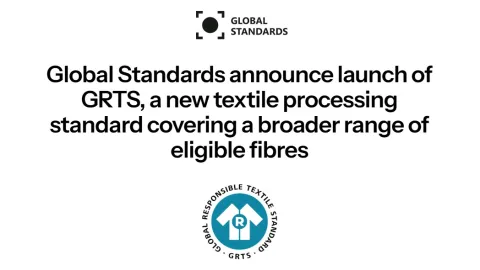
Global Responsible Textile Standard (GRTS) Launches for Certification of Wider Range of Fibers
Global Standards has launched the Global Responsible Textile Standard (GRTS), a new certification standard for textiles made from a wider range of plant, animal, synthetic, man-made cellulosic and recycled fibers.
ISO 45001 Second Edition Clears DIS Ballot With Overwhelming Support
The draft second edition of ISO 45001 has passed its Draft International Standard (DIS) vote with only one vote against, moving the revision closer to its planned publication in the first half of 2027.