Management Systems World
All on Quality and other Standards in one place since 2010. Now Worldwide.
News Russian Federation
Please note that you have to be a registered member with paid membership in order to see full articles.
RegisterSelected News
Russia Extends Use of 'Eco' and 'Bio' Labels Without Organic Proof Until 2030
Manufacturers in Russia can continue using terms like "eco," "bio," and related labels on their products without needing to prove organic compliance until September 1, 2030.
Digital Standardization for Children’s Products Headlines July Issue of Standards and Quality
The July issue of Standards and Quality, a professional magazine covering standardization and quality topics in Russia,
Russia Makes Digital Labeling Mandatory for Spices and Snacks
Digital labeling is now mandatory for all seasonings, spices, and snack products in Russia as of July 1, 2025.
Cracking Down on Loopholes: Russia Moves to Enforce Declared Standards
Russia is updating its legislation on standardization to close loopholes and improve product quality.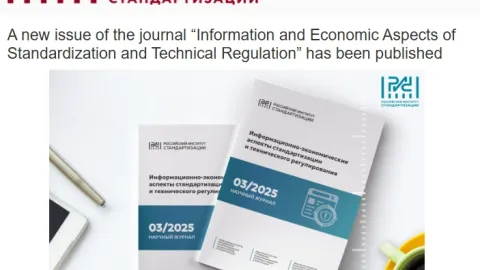
Russian Journal’s New Issue Spotlights Ecosystem of Standardization Launch
The latest issue of the Russian Institute of Standardization (RST) journal highlights the launch of the Ecosystem of Standardization, now registered in Russia’s National Scientific and Technological Infrastructure database (CKP RF).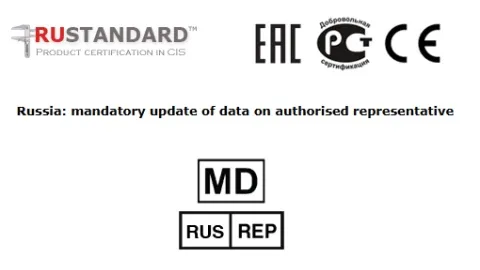
Russia Now Requires Local Representative for Foreign Medical Device Registration
Foreign manufacturers with medical devices registered in Russia must appoint a Russian Authorized Representative (RUS REP) or update existing representative details by August 31, 2025.
Applications Open for Russia’s 2025 Standardizer of the Year Award
The application period has begun for the seventh annual Standardizer of the Year award,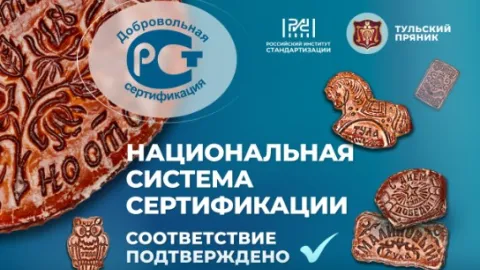
Tula Gingerbread Earns National Certification for Quality Standards
The famous Tula gingerbread, known locally as Tula pryanik, has been officially certified under Russia’s National Certification System, confirming it meets national quality standards.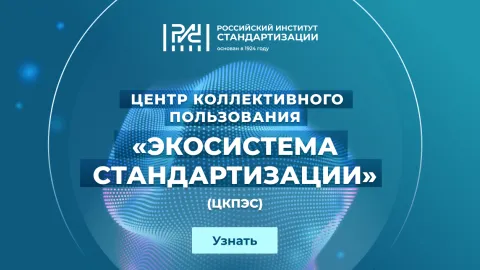
Russian Institute of Standardization Launches Standardization Ecosystem Center for Shared Use
The Russian Institute of Standardization (RST) has launched the Standardization Ecosystem Center for Shared Use to support digital transformation in standard development.
TD Yarmarka Earns Russian NSS Management System Certification
TD Yarmarka, a Russian food company, has successfully passed management system certification under the National Certification System (NSS), overseen by the Russian Institute for Standardization.
New International Technical Committee MTC 564 to Manage Product Life Cycles Across Eurasian States
A new interstate technical committee, MTC 564, was established to oversee the complete life cycle management of products.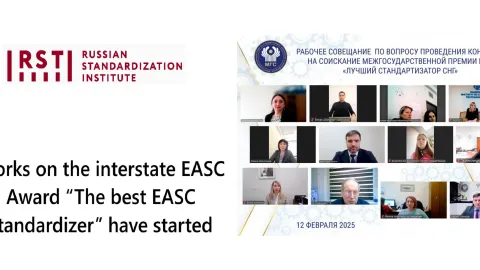
Preparations for 2025 Best EASC Standardizer Award Begin with First Meeting
On February 12, 2025, the Euro-Asian Council for Standardization (EASC) commenced preparations for the "Best EASC Standardizer" award.Global News
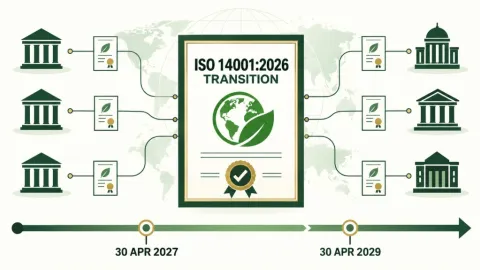
Accreditation Bodies Roll Out ISO 14001 Transition Plans
Accreditation bodies are putting the ISO 14001:2026 transition timetable into practice, with Norwegian Accreditation (NA) among the latest to publish detailed arrangements for certification bodies moving to the revised environmental management systems standard.
ISO Considers Three Tourism Proposals on Restaurant Evaluation, Tourist Guides and AI
Three tourism standardization proposals are now under consideration at the International Organization for Standardization (ISO), covering restaurant evaluation, professional tourist guide services and the use of artificial intelligence with tourism destination data.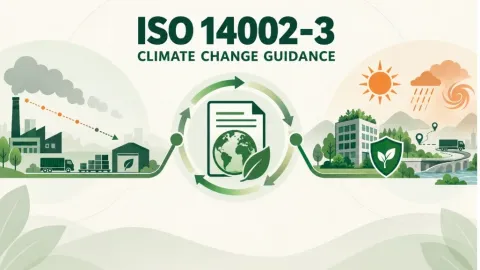
ISO 14002-3 Released as Guidance on Climate Change
The International Organization for Standardization (ISO) has released ISO 14002-3:2026, new guidance to help organizations using ISO 14001 address climate change through their environmental management systems.
AIQI Publishes First AI Use Case for Management System Certification Decisions
The Artificial Intelligence Quality Infrastructure (AIQI) Consortium has published a new use case examining how AI could support management system certification decisions, including the risks, limitations and controls that conformity assessment bodies may need to consider.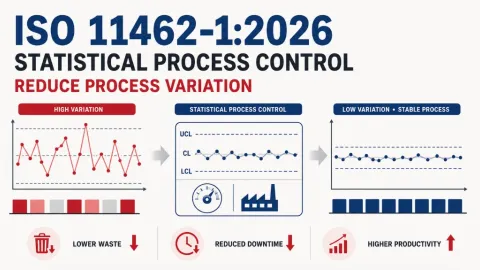
ISO 11462-1:2026 Updates Statistical Process Control to Reduce Process Variation
The International Organization for Standardization (ISO) has published ISO 11462-1:2026, updating guidance on statistical process control (SPC) to help organizations improve the stability and capability of their processes.
Codex Sets New Labelling Rules for Multipacks and Outer Packaging
The Codex Alimentarius Commission (CAC) has adopted new requirements for foods sold in multipacks or grouped together in one outer package, clarifying what information must appear on the packaging consumers see when buying the product.
SBTi Net-Zero Standard Version 2.0 Adds New Rules for Corporate Climate Targets, Reporting and Carbon Removals
The Science Based Targets initiative (SBTi) published Version 2.0 of its Corporate Net-Zero Standard on June 11, introducing new requirements for how companies set climate targets, plan their transition to net zero, report progress and deal with emissions that remain.
CSA Group to Sell Testing and Certification Business to Kiwa
Kiwa and CSA Group have agreed on a deal worth around $1.5 billion for Kiwa to acquire CSA Group’s testing, inspection and certification business, significantly expanding the Dutch company’s presence in North America.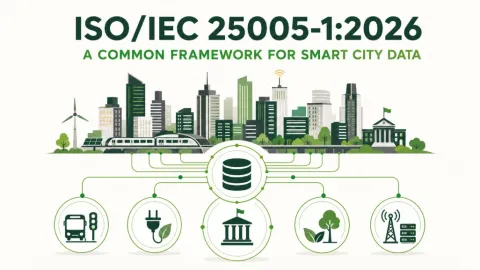
ISO/IEC 25005-1:2026 Creates Common Framework for How Smart Cities Use Data
ISO/IEC 25005-1:2026, published in July, provides a common international framework for how smart cities can make better use of data across urban governance and services.
Global ACI Delays Launch of New MRA Mark Pending Trademark Registration
Global Accreditation Cooperation Incorporated (Global ACI) has paused the launch of its new Multilateral Recognition Arrangement (MRA) Mark while trademark registrations are completed across member economies.
Major Changes Coming to ISO/IEC Standard-Development Rules
ISO and IEC will put a major rewrite of ISO/IEC Directives, Part 1 into effect on October 5, changing the common rules used to develop, maintain and manage international standards and other publications.