
Management Systems World
All on Quality and other Standards in one place since 2010. Now Worldwide.
News
Please note that you have to be a registered member with paid membership in order to see full articles.
RegisterSelected News
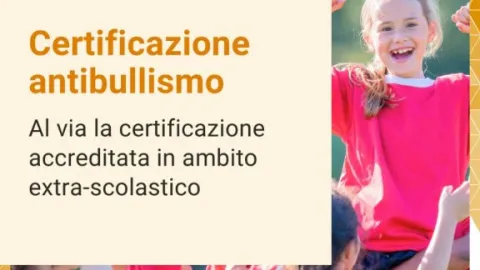
Italy Opens UNI 12000 Certification Scheme for Anti-Bullying Systems
Accredia, Italy’s national accreditation body, has opened accreditation for certification bodies that will certify organizations against UNI 12000,
Students Wanted For Korean Team: International Standards Olympiad Applications Open
South Korea has opened applications to select its national student team for the 21st International Standards Olympiad,
Free Risk Tool Launched for Healthcare Information Security Standard NEN 7510
The Netherlands Standardization Institute (NEN) has launched a free risk analysis tool to help healthcare organizations and other entities that process personal health data carry out the information security risk assessment required under NEN 7510.
China Approves Counterpart Units and Secretariat Hosts for Seven ISO and IEC Technical Bodies
The Standardization Administration of China (SAC) has approved domestic technical counterpart units for seven technical committees within
AI System Testing Guidance DIN SPEC 92006 Featured In Latest DIN Newsletter
The German Institute for Standardization (DIN) has released a new issue of its DINews newsletter, highlighting DIN SPEC 92006, a specification designed to help organizations test and evaluate artificial intelligence (AI) systems.
TÜV AUSTRIA Certified To ISO 30415 As Austria Prepares For EU Pay Transparency Rules
TÜV AUSTRIA, an Austrian testing, inspection, and certification organization, has obtained certification to ISO 30415,
Korea Accreditation Board Issues Guidance on Transition to Revised ISO 21001 for Education
The Korea Accreditation Board (KAB) has issued guidance to help certification bodies transition from ISO 21001:2018 to the revised ISO 21001:2025 for Educational Organizations Management Systems.
Kvalitetsmagasinet Opens Voting For Sweden’s 2026 Quality Profile Award
Kvalitetsmagasinet, a Swedish publication focused on quality management, has opened voting for the 2026 edition of its annual “Quality Profile of the Year” award after receiving 64 nominations from across the country.
Shanghai Fumanjia Convenience Earns Grade A Under BRCGS Agents And Brokers Standard
Shanghai Fumanjia Convenience (SFC) has achieved Grade A certification under the BRCGS Global Standard for Agents and Brokers after successfully passing an audit conducted by SGS, an international testing, inspection, and certification body.
ABNT Awards Nós por Elas Seals At Women’s Initiative Event In Paraná
The Brazilian Association of Technical Standards (ABNT) presented Nós por Elas seals during a public event recognizing organizations that implement structured practices to prevent violence against women.
SKZ Warns About Fake Certificates For Plastic Products
SKZ - German Plastics Center has warned about fake SKZ certificates for plastic products appearing in the market.
CNAS Revises Five Biobank Accreditation Documents And Sets Implementation Plan
China National Accreditation Service for Conformity Assessment (CNAS) has released five revised documents for biobank quality and competence accreditation.Global News
Feedback requested for guides ISO/IEC Guide 58-2019 and ISO/IEC Guide 63-2019
Comments on the systematic review of two guides are requested by October 18, 2024 and are collected by American National Standards Institute (ANSI).
ISO Proposes New area of Technical Activity: Creative Digital Design and Digital Marketing
ISO is getting creative! They’ve proposed new ISO technical committees for creative digital design and digital marketing, aiming to keep things as standardized as our morning coffee.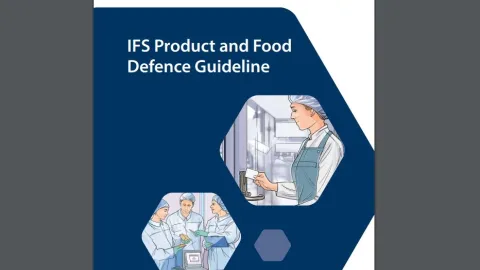
IFS released a complete review of their IFS Product and Food Defence Guideline (Version 2)
IFS has just released a complete review of their IFS Product and Food Defence Guideline (Version 2).
Seed Oil Free Certified Food Label Unveiled
The Seed Oil Free Alliance has introduced the "Seed Oil Free Certified" Standards and Certification Program in response to the widespread use of refined seed oils in the global food supply.
Standards support the implementation, testing and adoption of electronic health records
Standards support the implementation, testing, and adoption of electronic health records (EHRs).
Pirelli unveils world's first FSC-certified racing bicycle tyre
Pirelli has introduced the world's first FSC-certified racing bicycle tire, marking a significant step towards sustainable practices in the cycling industry.
CEN and CENELEC established a new coordination group on Hydrogen
The CEN and CENELEC Technical Boards have established a new Coordination Group on Hydrogen (CEN-CLC/COG H2) to ensure coherence across hydrogen-related standards.
New Consultation Opens for GFSI Benchmarking Requirements v2024
GFSI (Global Food Safety Initiative) has opened a new consultation for its Benchmarking Requirements (BMRs) version 2024, inviting stakeholders to participate.
Crucial Ways to Avoid Greenwashing - SGS White Paper
To avoid greenwashing while verifying environmental claims, it is crucial to understand various greenwashing tactics, including hidden trade-offs, lack of proof, vagueness, false labels, irrelevance, and outright lies.
IAF Publishes 2023 MLA Report
The International Accreditation Forum (IAF) published its 2023 Multilateral Recognition Arrangement (MLA) Report, detailing peer evaluation activities to ensure confidence in the IAF MLA.
New discussion platform for national technical working groups - GlobalGAP
The National Technical Working Groups (NTWGs) under GLOBALG.A.P. are local platforms that help adapt and implement GLOBALG.A.P. standards in specific countries.
