Management Systems World
All on Quality and other Standards in one place since 2010. Now Worldwide.
News Europe
Please note that you have to be a registered member with paid membership in order to see full articles.
RegisterSelected News
SIS Highlights Five Major Changes in Revised ISO 14001
The Swedish Institute for Standards (SIS) has published an analysis by standard expert and trainer Mikael Johansson outlining five areas organizations may need to reassess in the revised ISO 14001:2026 standard.
Proposed Standards Committee On 'Made in Europe' Criteria, Sovereignty and Resilience
The Spanish Association for Standardization (UNE) has proposed creating a new CEN and CENELEC Joint Technical Committee to define how “made in Europe” criteria should be assessed and verified,
DGQ Survey Examines Career Development in Quality Management
The German Society for Quality (DGQ) has opened a short survey examining how professionals enter and develop careers in quality management and quality assurance, as
Switzerland Launches Coby AI Tool for Standards Work
The Swiss Association for Standardization (SNV) has launched Coby, a specialized artificial intelligence (AI) tool designed for professionals working with standards and regulatory requirements.
Italy Publishes National Versions of ISO/IEC 17020 and 17024 Conformity Assessment Standards
The Italian National Unification Body (UNI) has published the Italian-language national versions of recently updated ISO/IEC 17020 and ISO/IEC 17024, replacing the previous 2012 editions.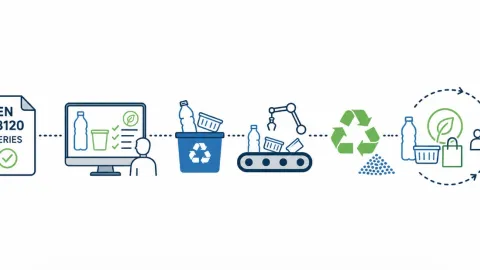
EN 18120 Series Published to Support Design of Plastic Packaging for Recycling
The European Committee for Standardization (CEN) has published the EN 18120 series, a new set of European standards that guide the design of plastic packaging for recycling.
‘Faktor Q’ Podcast Launches With Episode on Quality Culture in ISO 9001:2026
The German trade publication QZ has launched its new “Faktor Q” podcast with a first episode arguing that the upcoming ISO 9001:2026 update will make quality culture a more assessable part of quality management and leadership responsibility.
ILNAS Opens Revision of Laboratory Information Security Standard
The Luxembourg Institute of Standardisation, Accreditation, Safety, and Quality of Products and Services (ILNAS) has launched a public call for participation in the revision of the national standard ILNAS 107:2020,
France Prepares Transition to Revised ISO 17020 Standard
The French Accreditation Committee (Cofrac) is preparing accredited inspection bodies for the transition to the revised ISO/IEC 17020 standard following its publication on March 27, 2026.
EA Updates Guidance for Assessing Point-of-Care Testing Under EN ISO 15189
European co-operation for Accreditation (EA) has published a revised version of EA-4/20, updating how laboratories and accreditation bodies assess point-of-care testing (POCT) under EN ISO 15189:2022.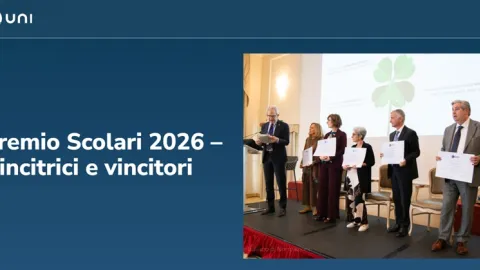
UNI Honors 2026 Paolo Scolari Award Winners for Contributions to Standardization
The Italian National Unification Body (UNI) has announced the winners of the 2026 Paolo Scolari Award, recognizing individuals who made significant contributions to technical standardization, quality infrastructure, and the promotion of standards culture in Italy and Europe.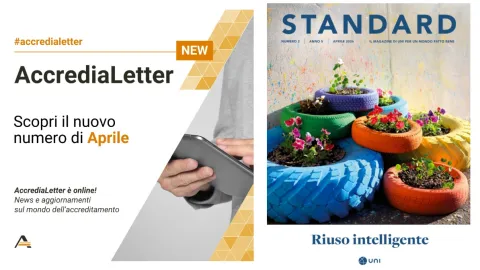
UNI and Accredia Release April Editions of Their Monthly Publications
The Italian National Unification Body (UNI) and the Italian accreditation body Accredia have released the April 2026 editions of their monthly publications, STANDARD and AccrediaLetter.Global News
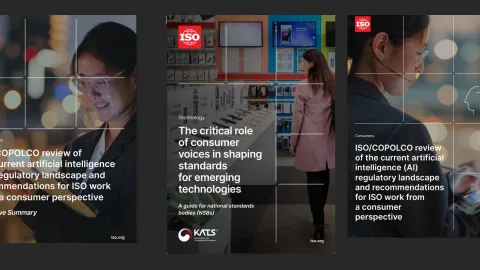
ISO Publishes Two New Resources on Consumer Voices in AI and Emerging Technologies
The International Organization for Standardization (ISO) has released two new resources aimed at strengthening the role of consumers in the standardization of artificial intelligence (AI) and other emerging technologies.
ISO/TS 14064-4 Introduced to Support Greenhouse Gas Reporting
The International Organization for Standardization (ISO) has published ISO/TS 14064-4, a new technical specification designed to help organizations apply ISO 14064-1 more consistently when measuring and reporting greenhouse gas emissions.
BRCGS Opens Public Consultation on Consumer Products Issue 5 Draft
BRCGS has opened a public consultation on the draft of Global Standard Consumer Products Issue 5, marking the first full revision of the standard since 2016 and setting the direction for how non-food consumer products will be certified in the coming years.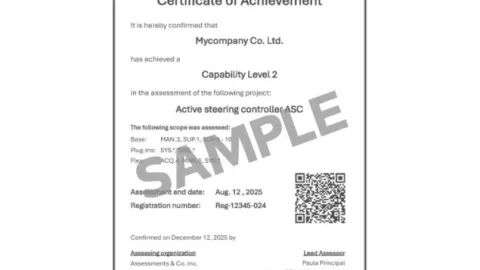
VDA QMC Introduces Official Certificates for Automotive SPICE Assessments
From January 1, 2026, companies will be able to officially register Automotive SPICE assessment results with the VDA Quality Management Center (VDA QMC) and issue recognized certificates without infringing trademark rules.
ISO 22095 Chain of Custody Standard Under Review With Call for Stakeholder Input
The international ISO 22095:2020 Chain of Custody standard is currently under review, and stakeholders are being invited to share their experience with using the standard.
International Standards Bodies Issue Seoul Statement on Trustworthy AI
International standards organizations have jointly issued the Seoul Statement on Artificial Intelligence, setting out a shared commitment to develop global standards that support safe, inclusive, and trustworthy AI.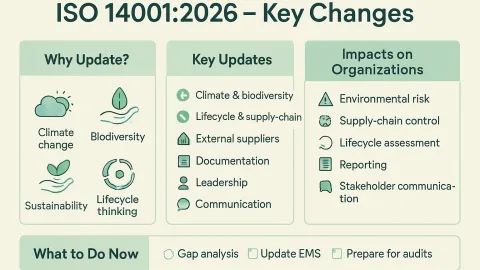
ISO 14001:2026 Final Draft Sets New Rules for Climate, Biodiversity and Documentation
The revision of ISO 14001 has recently entered its Final Draft International Standard (FDIS) stage, and the updated standard is scheduled for publication in April 2026.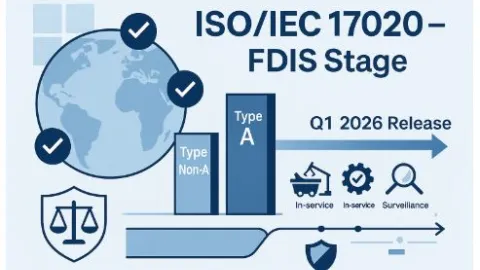
ISO 17020 Reaches Final Global Vote toward 2026 Release
The revision of ISO/IEC 17020, the international standard for inspection bodies, has reached the Final Draft International Standard (FDIS) stage and is now in its final global voting phase.
VDA Releases Draft Product Safety And Conformity Guidance for the Automotive Supply Chain
The German Association of the Automotive Industry (VDA) has released the first edition of Product Compliance Volume 2 as a draft edition, focused on safety and conformity requirements across the automotive supply chain, and opened it for industry feedback until February 21, 2026.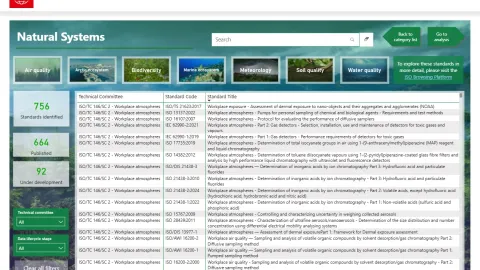
ISO Launches Interactive Dashboard with Over 1,100 Environmental Standards
The International Organization for Standardization (ISO) has launched a new interactive dashboard that brings together more than 1,100 International Standards linked to environmental data.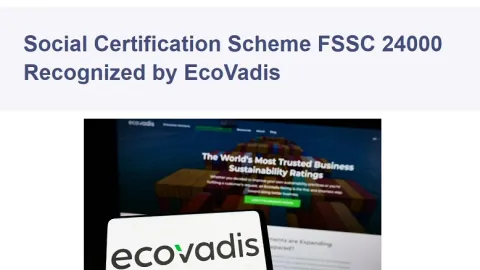
EcoVadis Recognizes FSSC 24000 Social Certification Scheme
EcoVadis has recognized the FSSC 24000 Social Management System Scheme as a valid certificate under the Labor and Human Rights topic, allowing certified companies to use it directly in EcoVadis sustainability assessments.