Management Systems World
All on Quality and other Standards in one place since 2010. Now Worldwide.
News Europe
Please note that you have to be a registered member with paid membership in order to see full articles.
RegisterSelected News
NEN Launches Standards Committee for Events Sector
The Royal Netherlands Standardization Institute (NEN) has launched a national Events standards committee, giving Dutch organizations and experts a formal route to influence international standards for the events sector.
PKN News August Edition: ISO 9001 Revision and Quality in Practice
The August edition of PKN News from the Polish Committee for Standardization (PKN) focuses on the ISO 9001 revision and shows how standards support quality and safety in areas ranging from healthcare to major sporting events.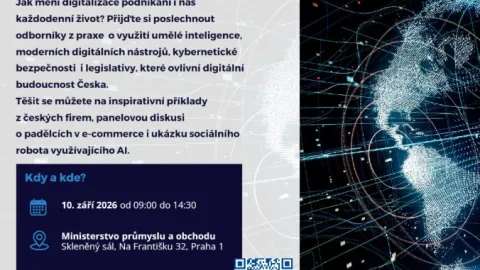
Czech Quality and Sustainability Conference Set for September 10
The 10th National Conference on Quality and Sustainability will examine how digitalization can support quality, security, competitiveness, and sustainable development.
SIST Seminar Targets Standards, Compliance, and Market Access for Innovative Companies
The Slovenian Institute for Standardization (SIST) will hold a free seminar on September 22 to help innovative companies use standards when developing products and preparing them for the Slovenian and EU markets.
Slovenia Seeks Members for New Quantum Technologies Committee
The Slovenian Institute for Standardization (SIST) is inviting experts to join a new national technical committee on quantum technologies, with applications due October 1, 2026.
First ISO Secretary-General Visit to Croatia Leads New HZN e-Glasilo
The Croatian Standards Institute (HZN) has released its July 2026 e-Glasilo, led by the first official visit to Croatia by an International Organization for Standardization (ISO) Secretary-General.
FSC Revises Regulatory Module After EUDR Simplifications
The Forest Stewardship Council (FSC) has revised its Regulatory Module to align with the latest simplifications to the EU Deforestation Regulation (EUDR), reducing due diligence and risk assessment obligations for some certificate holders.
ISS Webinar Prepares Organizations for ISO 9001:2026 Changes
The Institute for Standardization of Serbia (ISS) will hold a free webinar on September 18 on changes in ISO 9001:2026.
Bulgaria Establishes Innovation Management Standards Committee
The Bulgarian Institute for Standardization (BDS) has established BDS/TC 109, a technical committee dedicated to innovation management standards, replacing an expert working group that had operated in the field since 2011.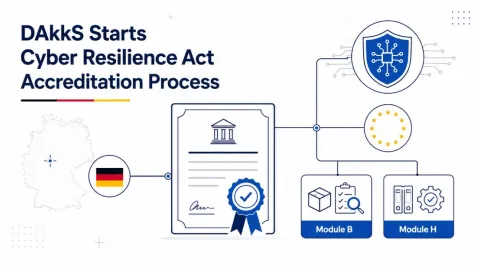
DAkkS Starts Cyber Resilience Act Accreditation Process
Germany’s national accreditation body, Deutsche Akkreditierungsstelle (DAkkS), has opened accreditation applications for conformity assessment bodies that want to work under the EU Cyber Resilience Act (CRA).
Erasmus MC Receives Netherlands’ First Biobank Accreditation
The Dutch Accreditation Council (RvA) has granted the Netherlands’ first biobank accreditation to Erasmus MC Central Biobank & Trialsupport.
Czech Republic Adds Construction-Stage Requirements to BIM Data Standard
The Czech Standardization Agency (ČAS) has added construction-stage requirements to the country’s Construction Data Standard (DSS), specifying what information digital building models used in Building Information Modeling (BIM) must contain while a project is being built.Global News
Chery Added as IATF's Third Asian Automotive Group Member
The International Automotive Task Force (IATF) has approved the addition of Chery Automobile, as a new member of IATF AISBL, making it the third Asian automotive group represented in the organization.
IFS Announces June Release of Progress Logistics Version 2
IFS will publish IFS Progress Logistics version 2 at the end of June, updating the program that helps companies prepare for IFS Logistics certification.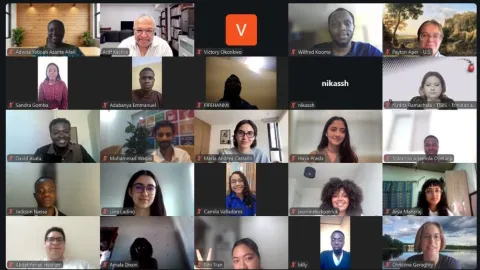
Third Cohort of Environmental Management Youth Leadership Group Kicks Off
The third cohort of the ISO Environmental Management (ISO/TC 207) Youth Leadership Group (YLG 3.0) has held its kick-off meeting, bringing together more than 45 participants from around 30 countries.
ISO 9606 Requirements for Welder Qualification Under Revision
The International Organization for Standardization (ISO) is revising ISO 9606, the international standard for qualification testing of welders performing fusion welding.
ISO 9001 Auditing Practices Group Releases First AI-Focused Guidance
The ISO 9001 Auditing Practices Group (APG) has published new guidance on auditing quality management systems that use artificial intelligence, marking the group's first publication dedicated specifically to AI.
ISO 10993-6 Standard for Implantation Testing Updated
The International Organization for Standardization (ISO) has published a revised edition of ISO 10993-6, expanding guidance for implantation studies used in the biological evaluation of medical devices.
All 12 Recognized Food Safety Program Owners Apply for GFSI Version 2024 Recognition
The Consumer Goods Forum's Global Food Safety Initiative (GFSI) has confirmed that all 12 previously recognized Certification Program Owners (CPOs) have applied for recognition against the GFSI Benchmarking Requirements Version 2024.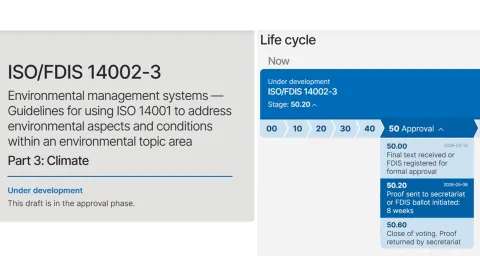
ISO 14002-3 Climate Guidance Advances to Final Draft Stage
ISO 14002-3, a guidance standard for managing climate-related issues within ISO 14001 environmental management systems, has advanced to the Final Draft International Standard (FDIS) stage.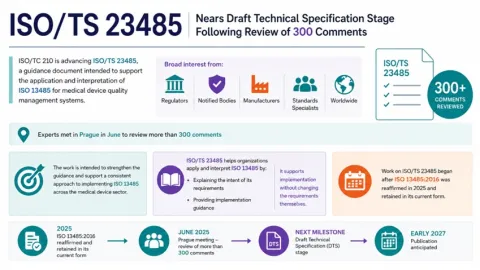
ISO/TS 23485 Nears Draft Technical Specification Stage Following Review of 300 Comments
The International Organization for Standardization's (ISO) Technical Committee 210 (ISO/TC 210) is advancing work on ISO/TS 23485,
Global ACI Explains Which IAF and ILAC Documents Remain in Force During Transition
The Global Accreditation Cooperation Incorporated (Global ACI) has published a cross-reference tableshowing the status of former International Accreditation Forum (IAF) and International Laboratory Accreditation Cooperation (ILAC) publications.
Standards Behind the FIFA World Cup 2026
As the FIFA World Cup 2026 gets underway across the United States, Canada and Mexico,