Management Systems World
All on Quality and other Standards in one place since 2010. Now Worldwide.
News Construction
Please note that you have to be a registered member with paid membership in order to see full articles.
RegisterSelected News

Dutch Experts Sought for New European Circular Construction Standards
The European standards committee CEN/TC 350/SC 1 has established five new working groups to develop standards for circular design, material efficiency, and reuse in the construction sector.
Upcoming Guidance to Pave the Way for Emission-Free Construction Sites in Denmark
A new guidance, DS/INF, is being developed to promote emission-free construction sites in Denmark, creating a shared understanding and framework for the industry.
First European Standard for Steel Reuse Marks Milestone for Circular Economy
The first European technical specification for reusing load-bearing steel in construction has been published as CEN/TS 1090-201:2024.
Azerbaijan Adopts Building Information Modeling Standards for Safety in Construction
The Azerbaijan Institute of Standardization (AZSTANDART) has adopted three new state standards for Building Information Modeling (BIM).
EU Adopts Construction Products Regulation with Focus on Digitalization and Circular Economy
The EU has adopted a new Construction Products Regulation, marking a milestone in efforts to modernize and enhance sustainability in the construction sector.
New Macedonian Standard for Concrete Structures Open for Public Review
The Institute for Standardization of the Republic of North Macedonia (ISRSM) has opened a public review for its standard for concrete structures.
BSI Rolls Out New Road Condition Monitoring Standard to Keep UK Roads on Track
BSI has launched PAS 2161, a new specification to standardize the collection of road condition data across the UK.
The Swiss Takeover: How SNV Took the Helm of ISO Wormgearing Standards Committee
The Swiss Association for Standardization (SNV) has assumed the secretariat management of the ISO/TC 60/SC 1 standards committee.
New Guidance Aims to Cut Carbon in UK Concrete Industry
The British Standards Institution (BSI) has released new guidance to help the concrete industry reduce its carbon emissions.
Montenegro Hosts BIM Standards Panel for Civil Engineering Experts
Montenegro’s Institute for Standardization (ISME), in partnership with the Faculty of Civil Engineering at the University of Montenegro, is set to host and discussion on BIM implementation in civil engineering.
New Standard Helps Tackle Brazil’s Housing Shortage with Faster Construction
The revised ABNT NBR 17073 standard is set to play a key role in addressing Brazil’s housing deficit by expanding the use of lightweight modular panels in civil construction.
Revised concrete standard contribute reducing CO2 emissions
A newly revised Danish standard for concrete DS 206:2024 is expected to help the industry significantly lower CO2 emissions, according to Danish Standards.Global News
GFSI Opens Consultation on FSSC 22000 Version 7 Against 2024 Benchmarking Requirements
The Global Food Safety Initiative (GFSI) has opened a public consultation on the recently updated FSSC 22000 Version 7 as part of its assessment against the GFSI Benchmarking Requirements Version 2024.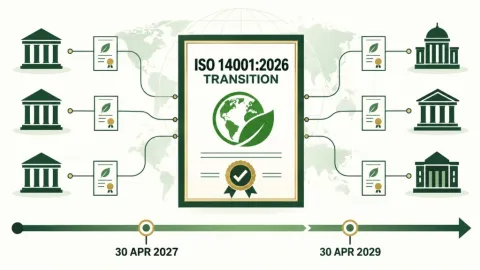
Accreditation Bodies Roll Out ISO 14001 Transition Plans
Accreditation bodies are putting the ISO 14001:2026 transition timetable into practice, with Norwegian Accreditation (NA) among the latest to publish detailed arrangements for certification bodies moving to the revised environmental management systems standard.
ISO Considers Three Tourism Proposals on Restaurant Evaluation, Tourist Guides and AI
Three tourism standardization proposals are now under consideration at the International Organization for Standardization (ISO), covering restaurant evaluation, professional tourist guide services and the use of artificial intelligence with tourism destination data.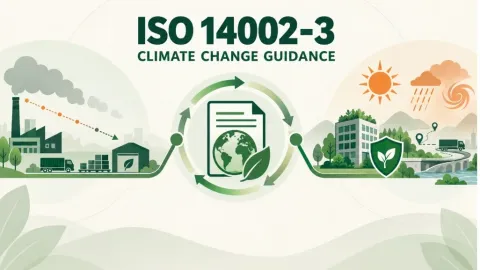
ISO 14002-3 Released as Guidance on Climate Change
The International Organization for Standardization (ISO) has released ISO 14002-3:2026, new guidance to help organizations using ISO 14001 address climate change through their environmental management systems.
AIQI Publishes First AI Use Case for Management System Certification Decisions
The Artificial Intelligence Quality Infrastructure (AIQI) Consortium has published a new use case examining how AI could support management system certification decisions, including the risks, limitations and controls that conformity assessment bodies may need to consider.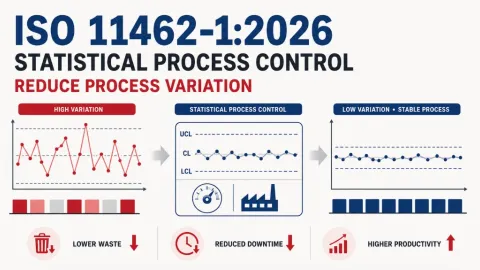
ISO 11462-1:2026 Updates Statistical Process Control to Reduce Process Variation
The International Organization for Standardization (ISO) has published ISO 11462-1:2026, updating guidance on statistical process control (SPC) to help organizations improve the stability and capability of their processes.
Codex Sets New Labelling Rules for Multipacks and Outer Packaging
The Codex Alimentarius Commission (CAC) has adopted new requirements for foods sold in multipacks or grouped together in one outer package, clarifying what information must appear on the packaging consumers see when buying the product.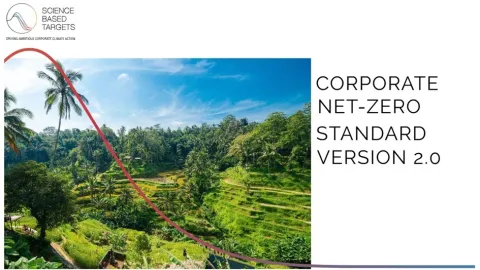
SBTi Net-Zero Standard Version 2.0 Adds New Rules for Corporate Climate Targets, Reporting and Carbon Removals
The Science Based Targets initiative (SBTi) published Version 2.0 of its Corporate Net-Zero Standard on June 11, introducing new requirements for how companies set climate targets, plan their transition to net zero, report progress and deal with emissions that remain.
CSA Group to Sell Testing and Certification Business to Kiwa
Kiwa and CSA Group have agreed on a deal worth around $1.5 billion for Kiwa to acquire CSA Group’s testing, inspection and certification business, significantly expanding the Dutch company’s presence in North America.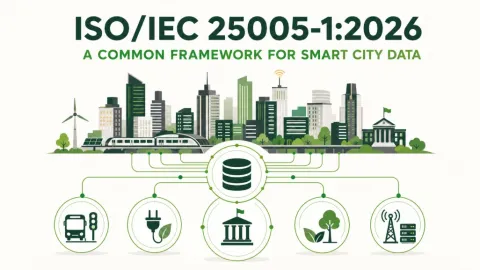
ISO/IEC 25005-1:2026 Creates Common Framework for How Smart Cities Use Data
ISO/IEC 25005-1:2026, published in July, provides a common international framework for how smart cities can make better use of data across urban governance and services.
Global ACI Delays Launch of New MRA Mark Pending Trademark Registration
Global Accreditation Cooperation Incorporated (Global ACI) has paused the launch of its new Multilateral Recognition Arrangement (MRA) Mark while trademark registrations are completed across member economies.