Management Systems World
All on Quality and other Standards in one place since 2010. Now Worldwide.
News Balkan
Please note that you have to be a registered member with paid membership in order to see full articles.
RegisterSelected News
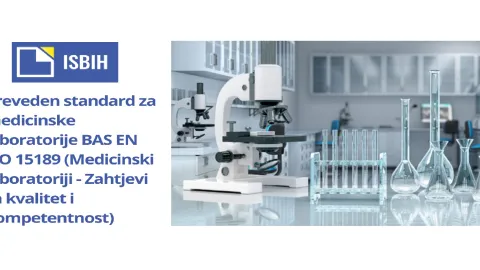
ISBIH Translates ISO 15189 Standard for Medical Laboratories
The Institute for Standardization of Bosnia and Herzegovina (ISBIH) has translated the latest edition of the international standard Medical Laboratories—Requirements for Quality and Competence, and issued it as BAS EN ISO 15189:2022.
Serbian Republic Geodetic Authority Earns ISO 37001 Certification for Corruption Prevention
The Serbian Republic Geodetic Authority (RGZ) has achieved ISO 37001 certification, affirming its procedures and systems are focused on preventing corruption.
Serbia Translates ISO 45006 for Managing Infectious Disease Risks at Work
On December 30, 2024, Serbia published SRPS ISO 45006:2024, offering guidance to organizations on preventing, controlling, and managing exposure to infectious agents in the workplace.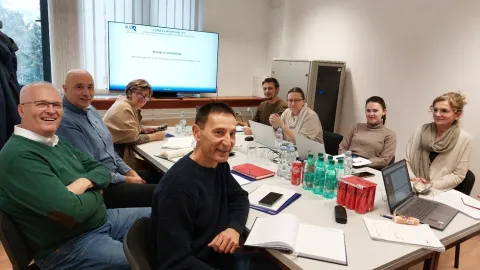
Training on Laboratory Accreditation Standards for Five Lead Assessor Candidates
The Institute for Accreditation of Bosnia and Herzegovina (BATA) conducted training for lead assessor candidates from January 14 to 16, 2025.
Serbia Publishes Updated Rules for Evaluating Measurement Uncertainty
The Accreditation Body of Serbia (ATS) has released the updated Rules for Evaluating Measurement Uncertainty (ATS-PA06), version 4/0, effective January 17, 2025.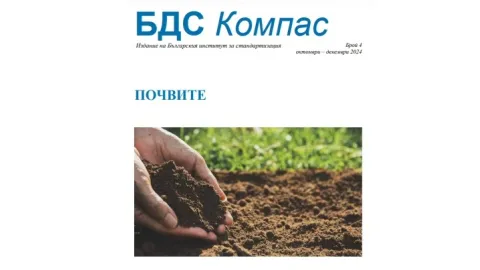
Soils Take Center Stage in Latest BDS Compass Magazine
The Bulgarian Institute for Standardization (BDS) has dedicated the latest issue of its online magazine, BDS Compass, to the critical topic of soil standardization.
Serbia Releases ESG Framework Translation Following Recent Global Publication
The Institute for Standardization of Serbia (ISS) has published the national translation of ISO’s IWA 48:2024, a framework for applying ESG principles.
Dr. Oetker Earns Halal Certification for Products Manufactured in Hungary
Dr. Oetker, a well-known food manufacturer specializing in baking and dessert products, has obtained Halal certification for 26 of its products manufactured in Hungary.
Croatian Accreditation Agency Revises Frequency of Surveillance Assessments
The Croatian Accreditation Agency (HAA) announced that changes to the frequency of regular surveillance assessments came into effect on January 8, 2025.
December Issue of HZN e-Bulletin Features Expert Council Session and Student Visit
The December 2024 issue of the HZN e-bulletin is now available, featuring updates on recent activities and milestones.
Croatia Commits €20 Million to Support Certification of Small and Medium Businesses
The Croatian Ministry of Economy announced on December 23, 2024, a call for applications for grants under the program Support for Business Certification and Management System Implementation.
Serbia Publishes Guide on Information Security Systems for Small and Medium Enterprises
The Serbian Standards Institute (ISS) has released a Serbian-language translation of the ISO guide for implementing information security management systems (ISMS) tailored to small and medium enterprises (SMEs).Global News
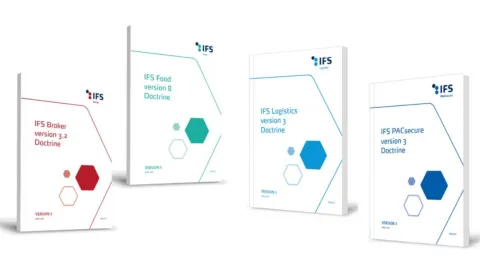
IFS Updates Food, Logistics, Broker And Pacsecure Doctrines To Clarify Certification Rules
The International Featured Standards (IFS) has published updated doctrine documents for its current standards covering food production, logistics, brokerage, and packaging materials, clarifying how certification requirements should be applied without revising the standards themselves.
PAS 25535 on Sustainability in Asset Management Reaches Draft Stage
PAS 25535, a specification focused on integrating sustainability into asset management systems, has reached the committee draft stage within the International Organization for Standardization (ISO), marking the close of its initial comment period.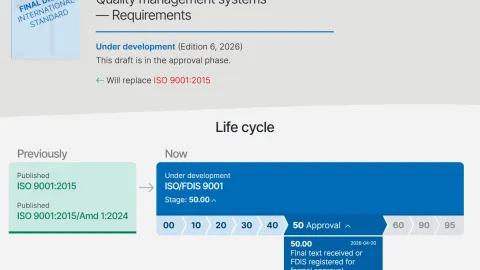
ISO 9001 Revision Moves to FDIS Stage as Early Analysis Questions Scope of Changes
The International Organization for Standardization (ISO) has confirmed that the revision of ISO 9001 has entered the Final Draft International Standard (FDIS) stage, marking the last step before publication.
DIN to Lead ISO IEC Joint Technical Committee 5 on Digital Product Passport Standards
Following an initiative by the German Institute for Standardization (DIN) and the German Commission for Electrical, Electronic & Information Technologies (DKE),
ANSI/TIA-942 Addendum Targets AI Data Center Cooling and High-Density Needs
The Telecommunications Industry Association (TIA) is developing a new addendum to the ANSI/TIA-942 data center standard to address the growing demands of artificial intelligence (AI) infrastructure.
IATF Introduces Mandatory Auditor Training for Corporate Scheme Audits
The International Automotive Task Force (IATF) has approved a new mandatory training module to strengthen how auditors assess organizations certified under corporate audit schemes for IATF 16949.
ISO/TS 19384 Sets First Standard for Digital Service Excellence
The International Organization for Standardization (ISO) has released ISO/TS 19384:2026,
FSSC Issues Five Sector-Specific Guides for Development Program Implementation
The Foundation for Food Safety Certification (FSSC) has published five sector-specific guidance documents to support organizations using the FSSC Development Program,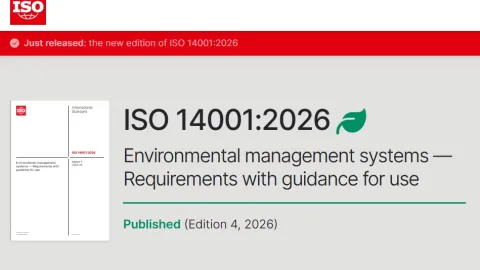
ISO 14001 Fourth Edition Officially Released
The International Organization for Standardization (ISO) has published ISO 14001:2026, marking the release of the fourth edition of the world’s most widely used environmental management systems standard.
Global ACI Introduced: IAF and ILAC Successor Presents New Identity
A new international accreditation body, Global Accreditation Cooperation Incorporated, has introduced a new identity as Global ACI, including a logo and communication channels after starting operations on January 1, 2026.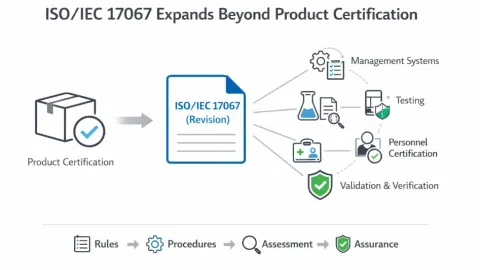
ISO 17067 Revision Expands Conformity Assessment Schemes
The International Organization for Standardization (ISO) Committee on Conformity Assessment (CASCO) is revising ISO/IEC 17067 to expand its scope from product certification to a broader framework for conformity assessment schemes.