Management Systems World
All on Quality and other Standards in one place since 2010. Now Worldwide.
News
Please note that you have to be a registered member with paid membership in order to see full articles.
RegisterSelected News
Transition to ISO 14001:2026: HAA Outlines Requirements and Deadlines
The Croatian Accreditation Agency (HAA) published instructions outlining the requirements and deadlines for accredited certification bodies transitioning to HRN EN ISO 14001:2026 on October 19, 2026.
ISO 9001:2026, Bilingual Edition of ISO 16559 and New Digital Identification Committee in HZN September Bulletin
The Croatian Standards Institute (HZN) published the September 2026 issue of its official bulletin, e-Glasilo, covering developments in national, European, and international standardization, including the new ISO 9001:2026.
PKN Conference to Explore Changes in ISO 9001:2026 and Their Practical Impact
The Polish Committee for Standardization (PKN) will hold a conference on November 3, 2026, in Warsaw to explore the changes introduced in ISO 9001:2026 and their practical impact on organizations.
BELAC Surveys Interest in New Sustainability Accreditation Activities
The Belgian Accreditation Body (BELAC) has launched a survey to assess demand for new accreditation activities related to sustainability.
DAkkS Confirms Continued Use of ILAC and IAF Marks During Global ACI Transition
The German Accreditation Body (DAkkS) has confirmed that accredited conformity assessment bodies can continue using the ILAC MRA and IAF MLA marks until further notice.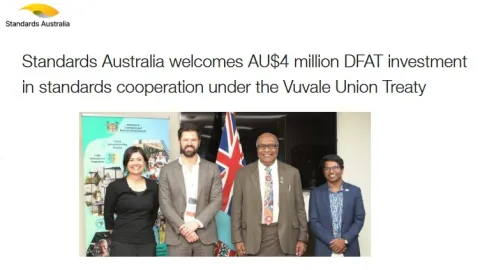
Australia Commits AU$4 Million to Strengthen Standards Infrastructure in Fiji
Australia has committed AU$4 million to strengthen Fiji's standards and quality infrastructure under the Fiji-Australia Vuvale Union Treaty.
KAB Issues Transition Guidelines for Three Revised ISO Standards
The Korea Accreditation Board (KAB) has issued transition guidelines for the 2026 editions of ISO 9001, ISO 14001, and ISO/IEC 17024.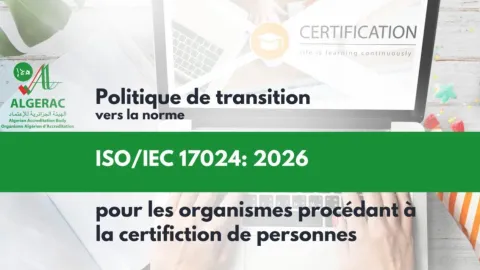
Algeria Details Deadlines for Adopting New ISO 14001 and ISO/IEC 17024 Editions
The Algerian Accreditation Body (ALGERAC) has published two transition policies setting deadlines for certification bodies to adopt the 2026 editions of ISO 14001 and ISO/IEC 17024.
Vietnam's An Giang and Hue Set Standards Adoption Targets for 2030
Vietnam's An Giang province and Hue city have adopted plans to help businesses and cooperatives apply standards by 2030.
European Draft Standard on Bias in AI Systems Open for Public Comment
A European draft standard on identifying, assessing, and managing bias in artificial intelligence (AI) systems is open for public comment until November 24, 2026.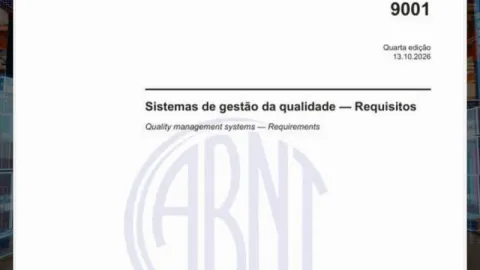
Brazil Releases Portuguese Edition of ISO 9001:2026
The Brazilian Association of Technical Standards (ABNT) published ABNT NBR ISO 9001:2026 in Portuguese on October 13, 2026.
Taiwan Proposes ISO 9001:2026 Accreditation Transition Deadlines
The Taiwan Accreditation Foundation (TAF) has published draft requirements setting deadlines for certification bodies to transition to ISO 9001:2026, the revised quality management systems standard. Public comments are open until October 20, 2026.Global News
ISO 14060 Net-Zero Draft Fails to Secure Approval, Returns for Revision
The draft of ISO 14060, the proposed international standard for net-zero aligned organizations, has failed to secure the approval needed to advance.
Global ACI Aligns CORSIA MRA Sub-Scope With Fourth Edition of ICAO Manual
Global Accreditation Cooperation Incorporated (Global ACI) has updated the Carbon Offsetting and Reduction Scheme for International Aviation (CORSIA) sub-scope of its Multilateral Recognition Arrangement (MRA) to align it with the latest international guidance.
ISO/UNDP 53001 Debuts as First International Management System Standard for Sustainable Development Goals
ISO and UNDP released ISO/UNDP 53001 on September 28, 2026, the world's first International Standard for managing contributions to the United Nations Sustainable Development Goals (SDGs).
ISO Central Secretariat Explains Key Changes in ISO 9001:2026 in New Video
The International Organization for Standardization (ISO) has released a detailed video explaining the changes in ISO 9001:2026 directly from its Central Secretariat.
Journalism Trust Initiative Proposed as New ISO Workshop Agreement
A proposal has been submitted to develop the Journalism Trust Initiative (JTI) into a new ISO International Workshop Agreement (IWA), extending an existing European framework for trustworthy journalism to the international level.
Global ACI Sets Three-Year Transition Timelines for ISO 14001:2026 and ISO 9001:2026
Global Accreditation Cooperation Incorporated (Global ACI) has set three-year transition periods for accredited certification to ISO 9001:2026 and ISO 14001:2026 , ending September 30, 2029 and April 30, 2029, respectively.
China Approves World’s First Medical Device Standard for AI Brain-Computer Interfaces
China has approved YY/T 2029-2026, the world’s first medical device standard for brain-computer interfaces (BCIs) that use artificial intelligence (AI).
IFS Makes EU Packaging Rules Self-Assessment Tool Available After 70-Company Pilot
International Featured Standards (IFS) has made its self-assessment tool for the EU Packaging and Packaging Waste Regulation (PPWR) available in the IFS Database after a pilot involving 70 companies.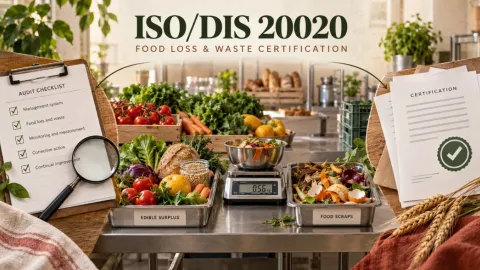
Comment Open on ISO/DIS 20020 for Bodies Auditing and Certifying Food Loss and Waste Management Systems
Comments are open on ISO/DIS 20020, a draft standard setting requirements for bodies that audit and certify food loss and waste management systems (FLWMS).
ISO Begins Developing IWA 52 to Harmonize Transport GHG Emission Factors
The International Organization for Standardization (ISO) is developing IWA 52 to harmonize how greenhouse gas (GHG) emission factors are calculated for transport.
ISO 22095-1 Chain of Custody Revision Reaches Committee Draft Stage
ISO 22095-1 has reached the Committee Draft stage, moving the revision of the general chain of custody framework into formal consultation.