Management Systems World
All on Quality and other Standards in one place since 2010. Now Worldwide.
News Germany
Please note that you have to be a registered member with paid membership in order to see full articles.
RegisterSelected News
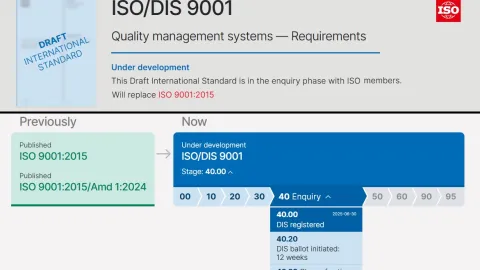
DIN Invites Public Comments on ISO 9001 Draft
The German Institute for Standardization (DIN) has opened the public comment phase in Germany for the revised draft of ISO 9001,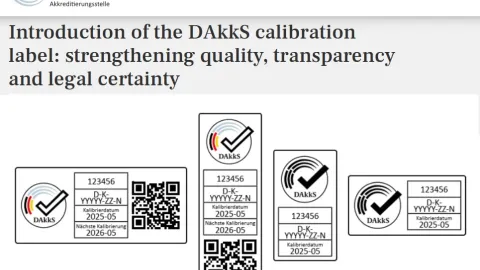
DAkkS Launches Calibration Label to Strengthen Trust and Transparency
The German Accreditation Body (DAkkS) has introduced the new DAkkS calibration label, a protected trademark that accredited calibration laboratories can now use to mark their services.
DIN Publishes New Standard for Measuring Impact of Climate Protection Measures
The German Institute for Standardization (DIN) has released DIN SPEC 91637, a new standard for measuring the impact of climate protection measures at local, regional, and national levels.
DAkkS Completes ISO 15189 Transition With All Medical Labs in Germany Retaining Accreditation
The Deutsche Akkreditierungsstelle (DAkkS), Germany’s national accreditation body, has successfully completed the nationwide changeover to the revised DIN EN ISO 15189 standard for medical laboratories.
DAkkS Replaces Handwritten Signatures with Digital Seals to Improve Certificate Security
As of July 15, 2025, the Deutsche Akkreditierungsstelle (DAkkS) has introduced digital seals on all certificates and notices,
Shaping Standards for Sustainable Cities: Young Professional Monika Heyder in the Spotlight
Monika Heyder, a Senior Expert in Green and Digital Transformation at ICLEI - Local Governments for Sustainability, is featured in the second 2025 interview of the CEN and CENELEC Young Professionals in European Standardization series.
South German Quality Day Tackles Cybercrime, AI and Psychological Safety
The 4th South German Quality Day was held on June 27 in Stuttgart, bringing together quality professionals for a sold-out event focused on emerging challenges in the field.
Germany and India to Host 10th Annual Quality Infrastructure Meeting in New Delhi
The 10th Annual Meeting of the Indo-German Working Group on Quality Infrastructure will take place on July 16, 2025, at the India Habitat Centre in New Delhi.
SMART Standards Seen as Key Tool for Digital Transformation, German Survey Finds
The 13th annual survey by the German Standardization Panel was presented on June 24 by the German Institute for Standardization (DIN) and the German Commission for Electrical, Electronic & Information Technologies (DKE).
Germany Issues DIN SPEC 91508 for Choosing the Optimal Carbon Management Method
Germany has released DIN SPEC 91508, a free standard for carbon management that helps evaluate whether carbon capture and utilization (CCU) or carbon capture and storage (CCS) is the better choice in a given situation.
Germany Starts Countdown to 50 Years of Standardization Treaty With New Campaign
The German Institute for Standardization (DIN) has started the countdown to the 50th anniversary of the Standards Agreement between the Federal Republic of Germany and DIN,
Corporate Culture Tops Agenda at North German Quality Day in Hamburg
At the North German Quality Day conference in Hamburg, participants rated corporate culture and leadership as far more important than standards and rules, suggesting a possible shift in thinking within quality management.Global News
ISO/IEC 9837:2026 Establishes Common Concepts for Systems Resilience
ISO/IEC 9837:2026, a new international standard on systems resilience, provides a common basis for understanding how systems can withstand disruptions, adapt to adverse conditions, and recover from failures.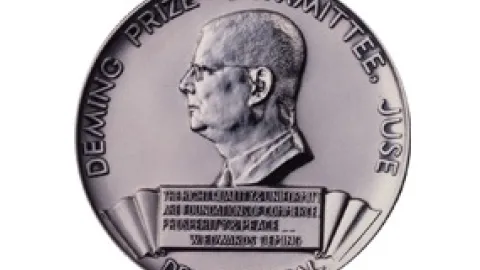
2026 Deming Prize Winners Announced
The Deming Prize Committee announced the 2026 winners on October 6, recognizing two individuals for their contributions to quality management and four organizations from Japan, India, and Indonesia.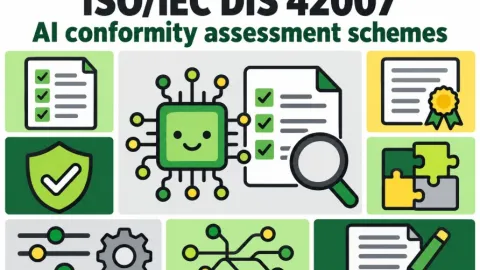
Draft ISO/IEC 42007 Sets Framework for AI Conformity Assessment Schemes
ISO and IEC are developing ISO/IEC DIS 42007, a framework for conformity assessment schemes for artificial intelligence (AI) systems.
ISO Approves Development of Innovation Management Guidance for Startups and SMEs
The International Organization for Standardization (ISO) has approved a new project to develop innovation management guidance for startups and small and medium-sized enterprises (SMEs).
BRCGS Consumer Products Issue 5 Set for Launch at Connect Americas
BRCGS will launch Consumer Products Issue 5 at BRCGS Connect Americas in Nashville on October 13, 2026, introducing a revised certification standard for consumer product manufacturers. Audits against the new edition will begin on June 1, 2027.
GRI Begins Developing Sustainability Reporting Standard for Food and Beverages
The Global Reporting Initiative (GRI) has begun developing a new Sector Standard for food and beverage companies, covering sustainability impacts across their own operations and value chains.
GGN Label Updates Sustainability Claims as EU Rules Begin to Apply
Agraya has updated the sustainability claims used with its GGN label as new European Union rules on environmental marketing began to apply on September 27.
GFSI Seeks Feedback on Freshcare and SQF Programs Under 2024 Requirements
The Global Food Safety Initiative (GFSI) has opened public consultations on Freshcare Food Safety & Quality Standard Edition 5 (2026) and SQF Code Edition 10 for recognition against the GFSI Benchmarking Requirements Version 2024.
ISO 20001:2026 Published as First Food Loss and Waste Management Standard
The International Organization for Standardization (ISO) has published ISO 20001:2026, its first management system standard dedicated to preventing and reducing food loss and waste across the food supply chain.
ISO 14060 Net-Zero Draft Fails to Secure Approval, Returns for Revision
The draft of ISO 14060, the proposed international standard for net-zero aligned organizations, has failed to secure the approval needed to advance.
Global ACI Aligns CORSIA MRA Sub-Scope With Fourth Edition of ICAO Manual
Global Accreditation Cooperation Incorporated (Global ACI) has updated the Carbon Offsetting and Reduction Scheme for International Aviation (CORSIA) sub-scope of its Multilateral Recognition Arrangement (MRA) to align it with the latest international guidance.