
Management Systems World
All on Quality and other Standards in one place since 2010. Now Worldwide.
News Balkan
Please note that you have to be a registered member with paid membership in order to see full articles.
RegisterSelected News
Serbian Chamber of Commerce Launches National ESG Platform Powered by AI
The Serbian Chamber of Commerce and Industry (PKS) has launched ESGstandard,the country’s first national digital platform for environmental, social, and governance (ESG) self‑assessment and improvement.
CROLAB’s New E-Glasilo Previews 20th Laboratory Competence Conference in Zadar
The Croatian Association of Laboratories (CROLAB) has published the July 2025 issue of its E-Glasilo, featuring a preview of the 20th International Conference on Laboratory Competence.
Tuzla International Airport Receives Unlimited EASA Certification
Tuzla International Airport has officially been awarded permanent certification from the European Union Aviation Safety Agency (EASA), confirming its full compliance with European aviation laws and practices.
BATA Trains Assessors for ISO 17029 and ISO 14065 Verification Scheme
The Bosnian Institute for Accreditation (BATA) has held an online training session to build capacity in environmental verification and validation,
June Issue of HZN Bulletin Covers EFSD Meeting, Quantum Cybersecurity and Food Safety
The June 2025 issue of the HZN e-Glasilo, the official publication of the Croatian Standards Institute (HZN), features highlights from the 59th meeting of the European Forum for Standards Distribution (EFSD), held in Zagreb.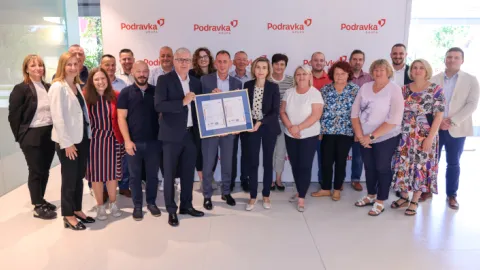
Podravka Achieves ISO 50001 Certification for Energy Efficiency
Podravka d.d., a leading Croatian food company, has achieved ISO 50001 certification in recognition of its efforts to improve energy efficiency and reduce consumption.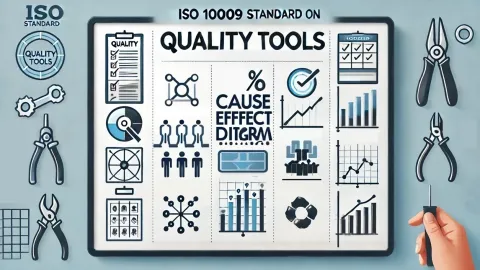
Serbia Preparing National Version of ISO 10009 Standard for Quality Tools
Serbia has begun the process of adopting ISO 10009:2024, a standard that provides guidance on selecting and using tools within a quality management system.
NIS 2 Compliance Projects Spread Across Croatia
In recent months, a growing number of organizations across Croatia have started projects to align with the NIS 2 Directive and the national Cybersecurity Act, aiming to improve cyber resilience and business continuity.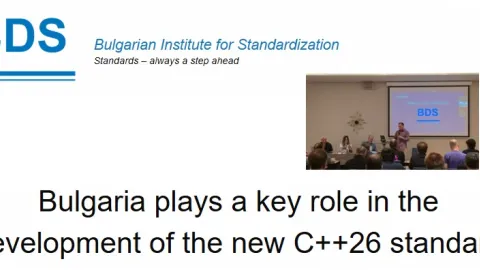
Final Technical Discussions on C++26 Programming Language Standard Held in Sofia
The June 16–21 meeting of ISO/IEC JTC 1/SC 22’s WG 21 working group was held in Sofia,
Croatian Standards Institute Celebrates 20 Years of Advancing Quality and Safety
The Croatian Standards Institute (HZN) marked its 20th anniversary on July 1, celebrating two decades of strengthening Croatia’s quality infrastructure and contributing to national and international standardization.
Serbia Releases Three New Standards for Conformity Assessment and Asset Management
The Institute for Standardization of Serbia (ISS) published three Serbian-language standards on June 30.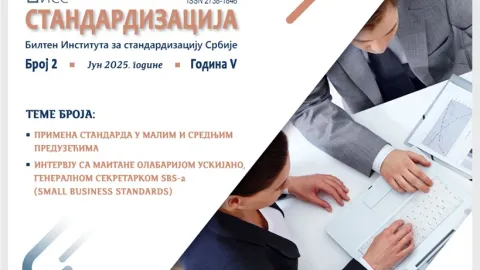
Latest ISS Bulletin Focuses on Small Business Standards and Cybersecurity
The Institute for Standardization of Serbia (ISS) has released the latest issue of its quarterly bulletin Standardizacija (Standardization),Global News
PEFC Launches Project Sourcing Certification for Construction Projects
The Programme for the Endorsement of Forest Certification (PEFC) has launched a new Project Sourcing certification program for the construction sector.
Development Begins on ISO 59001 Circular Economy Management Standard
The International Organization for Standardization (ISO) has begun development of ISO 59001, a future certifiable management system standard for the circular economy.
ISO 32212 Introduces Net Zero Transition Planning Framework for Finance
The International Organization for Standardization (ISO) has published ISO 32212:2026,
ISO 45010 Workplace Menstruation and Menopause Guidance Advances to Final Approval Stage
The International Organization for Standardization (ISO) has advanced ISO 45010, which provides guidance on menstruation and menopause in the workplace, has advanced to the Final Draft International Standard - FDIS stage.
ISO Considers New Committee for Tunnel Design
A proposal to create a dedicated ISO technical committee for tunnel design is under consideration.
FSC Invites Feedback on Four Active Consultations
The Forest Stewardship Council (FSC) is inviting feedback on four active consultations.
CQI Launches Knowledge Hub for Quality Professionals
The Chartered Quality Institute (CQI) has launched a new Knowledge Hub that brings together quality information, learning resources and industry insights in one place.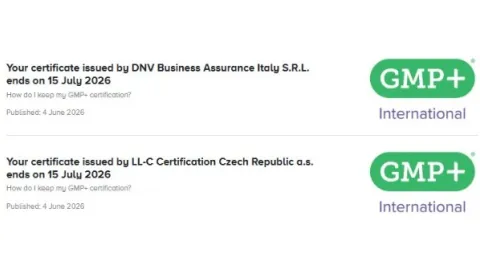
July 15 Deadline Nears for GMP+ Certificates Issued by DNV Italy and LL-C
GMP+ International has warned companies GMP+ Feed certificates issued by DNV Business Assurance Italy S.R.L. or LL-C Certification Czech Republic a.s. that
ISO 9000 and ISO 19011 Revised: New Guidance for Quality and Auditing
Two cornerstone standards for quality management and auditing have been revised, with the International Organization for Standardization (ISO) publishing new editions of ISO 9000 and ISO 19011.
ISO 9002 Revision Reaches Public Comment Stage
The International Organization for Standardization (ISO) has advanced the revision of ISO 9002 to the Draft International Standard (DIS) stage, opening the project for wider review and feedback.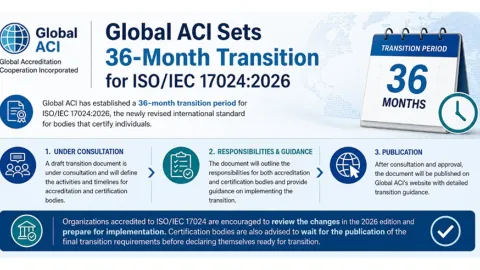
Global ACI Sets 36-Month Transition for ISO/IEC 17024:2026
The Global Accreditation Cooperation Incorporated (Global ACI) has established a 36-month transition period for ISO/IEC 17024:2026, the newly revised international standard for bodies that certify individuals.