
Management Systems World
All on Quality and other Standards in one place since 2010. Now Worldwide.
News North Macedonia
Please note that you have to be a registered member with paid membership in order to see full articles.
Become a MemberSelected News

Macedonia Adopts ISO 37003 Anti-Fraud Standard
North Macedonia has adopted ISO 37003:2025 as a national standard, published as MKS ISO 37003:2025, making international guidance on fraud control management systems available at national level.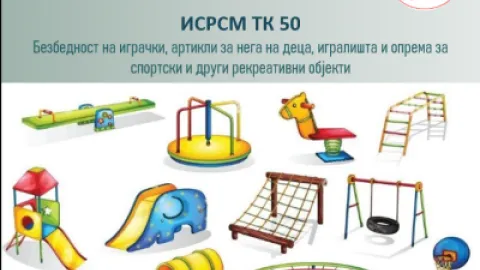
ISRSM Forming Committee on Toy and Child Safety, Invites Participation
The Institute for Standardization of the Republic of North Macedonia (ISRSM) has begun the process to establish a new technical committee, ISRSM TC 50,
Hemp Use in Food Explored at TAIEX Workshop in North Macedonia
The Institute for Standardization of the Republic of North Macedonia (ISRSM) organized a two-day workshop on October 29-30 focused on the use of hemp in food production,
North Macedonia Calls for Public Consultation on ISO 9001 Draft
The Institute for Standardization of the Republic of North Macedonia (ISRSM) has opened a public consultation on ISO/DIS 9001:2025,
North Macedonia Adopts National Version of ISO 37001 Anti-Bribery Standard
A new national standard, MKS ISO 37001:2025, has been published in North Macedonia to help organizations prevent, detect, and respond to bribery.
North Macedonia Proposes New Technical Committee on Security and Resilience
The Institute for Standardization of the Republic of North Macedonia (ISRSM) has launched a procedure to form a new technical committee, ISRSM TC 49 – Security and Resilience.
ISRSM Celebrates 20 Years of Its First Technical Committee
The Standardization Institute of the Republic of North Macedonia (ISRSM) marked the 20th anniversary of its first Technical Committee, TC 16 – Coding of Names of Countries and Related Entities, with its 13th session.
Macedonian Standardization Body Reviews Key 2024 Activities
The ISRSM (Institute for Standardization of the Republic of North Macedonia) has released "ISRSM Info 2024,"
ISRSM Assembly Reviews Accomplishments and Plans Strategic Priorities at 22nd Session
The Institute for Standardization of the Republic of North Macedonia (ISRSM) held its 22nd Assembly Session on December 18, 2024.
ISRSM Holds First Session of Technical Committee for Intelligent Transport Systems
The Institute for Standardization of the Republic of North Macedonia (ISRSM) held the first session of its newly formed Technical Committee - TC for Intelligent Transport Systems (ISRSM TC 48) on December 12, 2024, at its headquarters.
REFORD Recognized as PEFC Member for North Macedonia in General Assembly
The PEFC General Assembly has officially recognized the Regional Centre for Forestry and Rural Development (REFORD) as North Macedonia's PEFC national member.
New Macedonian Standard for Concrete Structures Open for Public Review
The Institute for Standardization of the Republic of North Macedonia (ISRSM) has opened a public review for its standard for concrete structures.Global News
ISO 14001 Fourth Edition Officially Released
The International Organization for Standardization (ISO) has published ISO 14001:2026, marking the release of the fourth edition of the world’s most widely used environmental management systems standard.
Global ACI Introduced: IAF and ILAC Successor Presents New Identity
A new international accreditation body, Global Accreditation Cooperation Incorporated, has introduced a new identity as Global ACI, including a logo and communication channels after starting operations on January 1, 2026.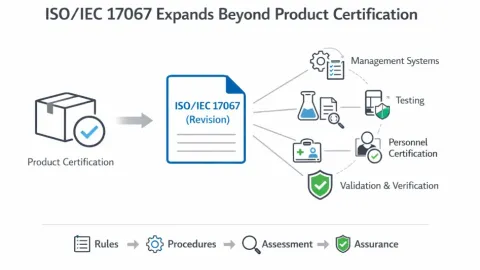
ISO 17067 Revision Expands Conformity Assessment Schemes
The International Organization for Standardization (ISO) Committee on Conformity Assessment (CASCO) is revising ISO/IEC 17067 to expand its scope from product certification to a broader framework for conformity assessment schemes.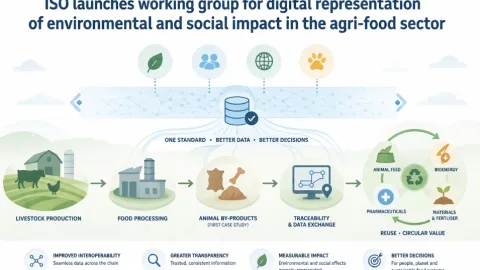
ISO Establishes Working Group on Environmental and Social Impact Data in Agrifood Systems
The International Organization for Standardization (ISO) has set up a new working group under ISO/TC 347 to develop a standardized way to record and share data on environmental and social impacts across agrifood supply chains.
European AI Standard for Computer Vision prEN 18281 Enters Public Enquiry
A European draft standard, prEN 18281, for evaluating AI systems that analyze images and video has entered public enquiry, setting out how such systems should be assessed as part of the broader framework supporting the EU AI Act.
Work Begins on IEC 60601-1 Medical Electrical Equipment Safety Standard Update
The International Electrotechnical Commission (IEC) has begun work on updating IEC 60601-1, the core standard for the safety and essential performance of medical electrical equipment.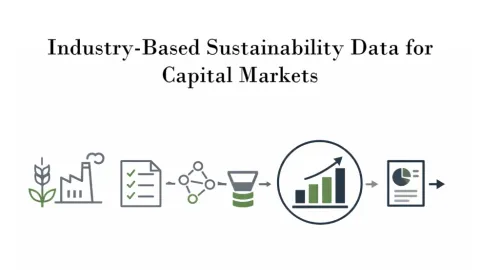
ISSB Proposes Updates to Three SASB Standards, Refining Sustainability Reporting in Agriculture, Food and Power
The International Sustainability Standards Board (ISSB) has issued a consultation on proposed amendments to three Sustainability Accounting Standards Board (SASB) Standards to support alignment with IFRS S1 and IFRS S2,
FSC Proposes New Approach To Intact Forest Landscapes Protection
The Forest Stewardship Council (FSC) has launched two public consultations on draft Advice Notes to strengthen how Intact Forest Landscapes (IFLs) are managed and protected.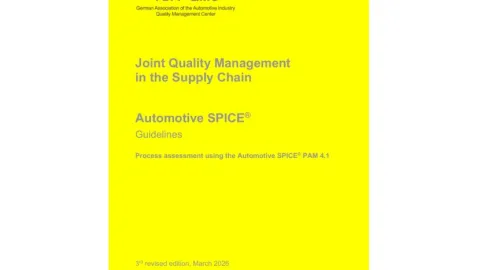
VDA Releases Automotive SPICE Yellow Volume 3rd Revised Edition for Public Review
The German Association of the Automotive Industry (VDA) Quality Management Center (QMC) has released the Automotive SPICE Yellow Volume 3rd revised edition, opening a public feedback period until May 12, 2026.
Technical Guides Explain 2026 Updates to ISO 9001 and ISO 14001
Global certification body Bureau Veritas has released two technical guides on the revised versions of ISO 9001 and ISO 14001,
VDA 20 Guide on AI in Quality Management Opens for Feedback
The German Association of the Automotive Industry (VDA) has released VDA 20 – AI in Quality Management as a draft document and opened it for public feedback until June 30, 2026,