Management Systems World
All on Quality and other Standards in one place since 2010. Now Worldwide.
News Financial
Please note that you have to be a registered member with paid membership in order to see full articles.
RegisterSelected News
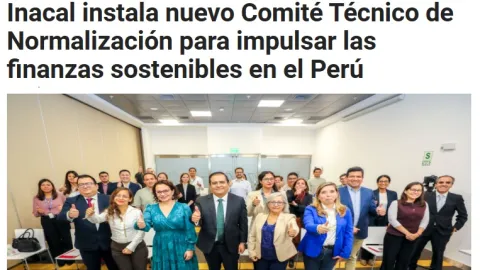
Peru Launches Sustainable Finance Standards Committee
The National Institute of Quality (INACAL) has established a new technical standardization committee on sustainable finance to develop national standards that support sustainable investment and financing practices in Peru.
AFNOR Event Brings Together Financial Organizations Holding ‘Committed to CSR’ Label
The French Association for Standardization (AFNOR) brought together financial organizations holding its ‘Committed to CSR’ label during a national meeting in Paris focused on sustainability reporting,
Italy Starts Work on UNI Practice for Economic and Operational Performance Control
The Italian Organization for Standardization (UNI) is starting work on a new reference practice for management control systems, aiming to provide a structured way to monitor economic and operational performance.
China Issues New Guide For Public Institution Carbon Accounting
A new industry standard for carbon accounting in public institutions took effect on April 1, marking a step toward more consistent measurement and management of emissions across China’s public sector.
Axis Bank Becomes First Financial Services Institution to Receive ISO 42001 AI Certification
Axis Bank, one of the largest private sector banks in India, has become the first financial services institution globally to be certified to ISO/IEC 42001 for its Artificial Intelligence Management System (AIMS).
NSAI Opens Consultation on EU eInvoicing Standard
The National Standards Authority of Ireland (NSAI) has launched a public consultation on the revised draft of prEN 16931-1, the European standard on electronic invoicing.
UK Opens Consultation on Draft Sustainability Reporting Standards Based on IFRS
The UK government has published draft sustainability reporting standards, UK SRS S1 and UK SRS S2, and opened a public consultation running until September 17.
Bank of Namibia Upgrades National Payment System to ISO 20022
The Bank of Namibia has successfully transitioned its Namibia Interbank Settlement System (NISS) to the ISO 20022 global payment messaging standard, effective May 12, 2025.
BSI Introduces Guidance to Fight Greenwashing in Sustainable Investment Funds
New guidance has been released to help fund managers clearly define, manage, and communicate sustainability claims in investment funds, aiming to restore trust and curb greenwashing.
Canada’s Communities Integrating Natural Assets into Financial Reporting with New Guide
A new guide titled Getting Nature into Financial Reporting has been released to help Canadian local governments include natural assets - such as wetlands, rivers, forests, and coastal dunes - in their financial reports.
SBTi introduces tougher Carbon Reduction Standards for Financial Institutions with November 2024 deadline
In a bid to accelerate climate action, the Science Based Targets initiative (SBTi) has unveiled version 2.0 of its standard for financial institutions.Global News
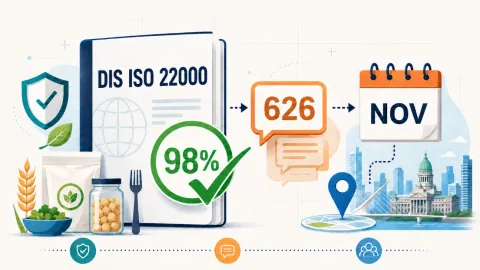
ISO 22000 Draft Approved With 98% Support, Comments Review Set for November
The revision of ISO 22000, the international standard for food safety management systems, has cleared its Draft International Standard (DIS) ballot with 98% positive votes.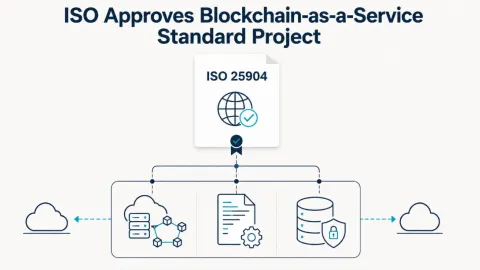
ISO Approves Blockchain-as-a-Service Standard Project
The International Organization for Standardization (ISO) has approved ISO 25904, a new standard project to establish a common technical framework and functional requirements for Blockchain-as-a-Service (BaaS) platforms.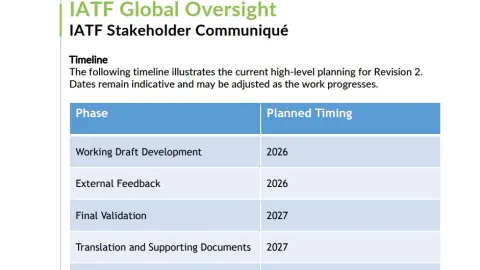
IATF 16949 Second Edition Expected in Mid-2027 With Five Priorities Set
IATF 16949 is expected to reach its second edition in mid-2027, with five priorities set for the revision.
GHG Protocol Aligns Scope 2 and AMI Development for Future Joint ISO Standard
The Greenhouse Gas Protocol (GHG Protocol) the results of its public consultation on the update to its Scope 2 Guidance and released preliminary feedback on the development of its Actions and Market Instruments (AMI) standard.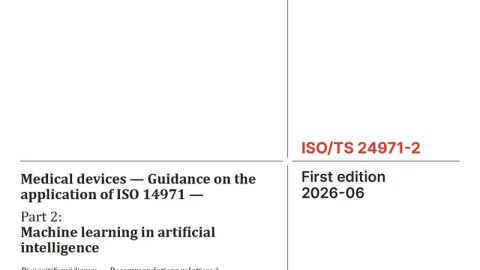
Risk Management Guidance for AI-Powered Medical Devices: First Edition of ISO/TS 24971-2 Released
ISO has released the first edition of ISO/TS 24971-2:2026, providing guidance on applying the ISO 14971 risk management process to machine learning-enabled medical devices (MLMDs).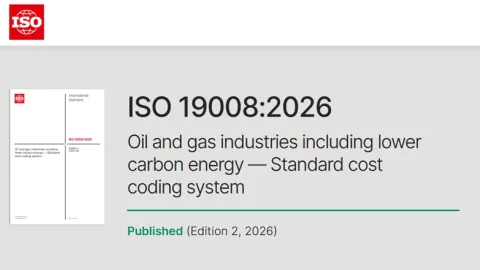
Revised ISO 19008 Expands Cost Coding System to Lower Carbon Energy
ISO 19008 has been revised to extend its common system for organizing and comparing cost data to lower carbon energy as well as oil and gas.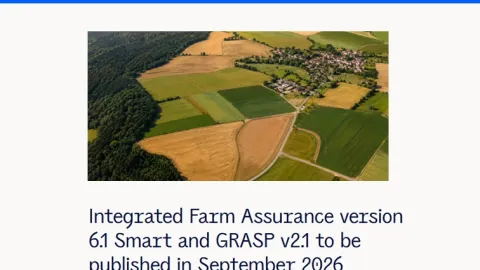
GLOBALG.A.P. Farm Assurance and Social Practice Standards Set for September Update
Agraya has announced that it will publish GLOBALG.A.P. Integrated Farm Assurance (IFA) v6.1 Smart and GLOBALG.A.P. Risk Assessment on Social Practice (GRASP) v2.1 on September 1, 2026.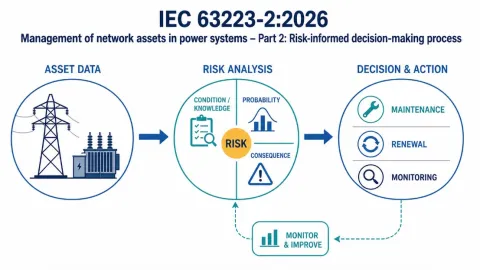
IEC 63223-2 Sets Risk-Informed Decision-Making (RIDM) Process for Power Network Assets
The International Electrotechnical Commission (IEC) has published IEC 63223-2:2026, introducing a structured risk-informed decision-making (RIDM) process for managing existing assets in power networks.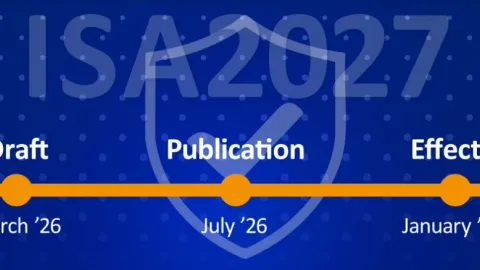
VDA Releases ISA 2027 Information Security Assessment Catalogue for TISAX
The German Association of the Automotive Industry (VDA) has published ISA 2027, the next version of the Information Security Assessment (ISA) catalogue used by TISAX, an information security assessment and exchange mechanism for the automotive industry.
Global Standards Updates Flagship GOTS Standard to Version 8.1
The Global Standards (GS) has updated the Global Organic Textile Standard (GOTS) to Version 8.1, its first revision since the major Version 8.0 release in March.
TÜV SÜD Acquires SustainCERT to Accelerate Digital Carbon Verification
Germany-based testing, inspection and certification company TÜV SÜD has acquired climate verification platform SustainCERT