Management Systems World
All on Quality and other Standards in one place since 2010. Now Worldwide.
News Laboratory
Please note that you have to be a registered member with paid membership in order to see full articles.
RegisterSelected News
Erasmus MC Receives Netherlands’ First Biobank Accreditation
The Dutch Accreditation Council (RvA) has granted the Netherlands’ first biobank accreditation to Erasmus MC Central Biobank & Trialsupport.
OECD Confirms Slovakia’s Good Laboratory Practice System Meets Requirements
The Organisation for Economic Co-operation and Development (OECD) has confirmed that Slovakia’s Good Laboratory Practice (GLP) monitoring system continues to meet its requirements, allowing qualifying study data from Slovak test facilities to remain internationally accepted.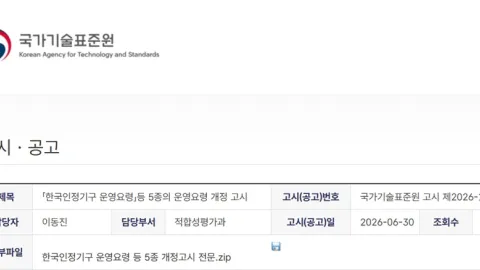
Korea Revises Five Operating Rules for Its Laboratory Accreditation Scheme
The Korean Agency for Technology and Standards (KATS) has revised five operating rules governing the Korea Laboratory Accreditation Scheme (KOLAS) to improve the operation of the national accreditation system and clarify existing requirements.
MESSER Receives Serbia's First Reference Material Producer Accreditation
The Accreditation Body of Serbia (ATS) has awarded Serbia's first accreditation for a reference material producer to MESSER TEHNOGAS AD BEOGRAD, establishing a new accreditation field in the country's quality infrastructure.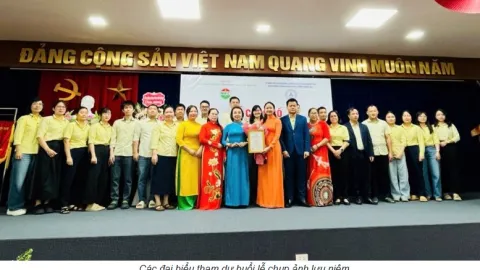
Vietnam Food Safety Institute Achieves GLP-OECD Status
The National Accreditation Office for Quality (BOA) awarded OECD Good Laboratory Practice (GLP) recognition to the National Institute for Food Control (NIFC),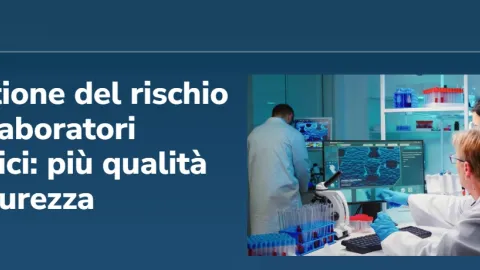
Italy Adopts ISO 22367:2026 for Medical Laboratory Risk Management
The Italian National Standardization Body (UNI) has published the Italian adoption of ISO 22367:2026, the revised international guidance standard for risk management in medical laboratories.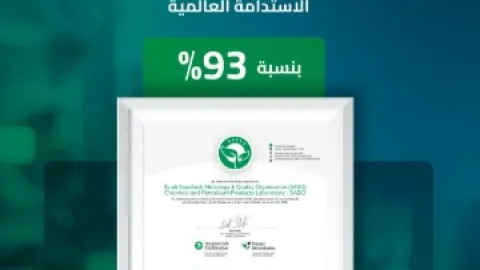
SASO Makkah Laboratory Earns Top-Level 'My Green Lab' Certification
The Saudi Standards, Metrology and Quality Organization (SASO) announced that its chemical and petroleum products laboratory branch in the Makkah region earned ‘My Green Lab’ Certification, with the laboratory achieving a score of 93%.
ASQA Signs $46 Million Laboratory Expansion Deal With TCRC
The Afghanistan Standards and Quality Authority (ASQA) has signed a 46 million-dollar deal with Indian company TCRC to expand and equip quality assurance laboratories in Kabul and nine border points across Afghanistan over the next five years.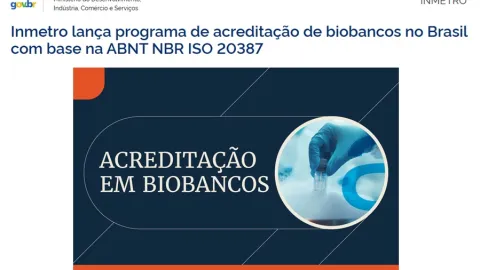
Inmetro Opens Pilot Accreditation Program for Brazilian Biobanks
The National Institute of Metrology, Quality and Technology (Inmetro) has opened applications for a pilot accreditation program for biobanks in Brazil based on ISO 20387.
Accredia Passes EA Peer Evaluation for Biobanking Accreditation
The Italian accreditation body Accredia has passed a peer evaluation by the European co-operation for Accreditation (EA), advancing the process for international recognition of Italian biobank accreditations under ISO 20387.
TÜRKAK Revises Proficiency Testing Procedure, Issues New Subfield List
Turkish Accreditation Agency (TÜRKAK) has revised its P704 laboratory proficiency testing procedure and published a new L704-001 subfield list.
ILNAS Opens Revision of Laboratory Information Security Standard
The Luxembourg Institute of Standardisation, Accreditation, Safety, and Quality of Products and Services (ILNAS) has launched a public call for participation in the revision of the national standard ILNAS 107:2020,Global News
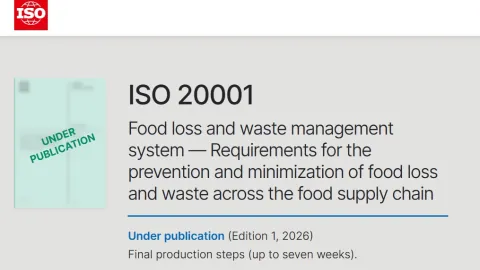
ISO 20001 Set for Publication as First Food Loss and Waste Management Standard
ISO 20001, the world’s first ISO management system standard dedicated to food loss and waste reduction, is scheduled for publication on September 29, 2026, marking the International Day of Awareness of Food Loss and Waste.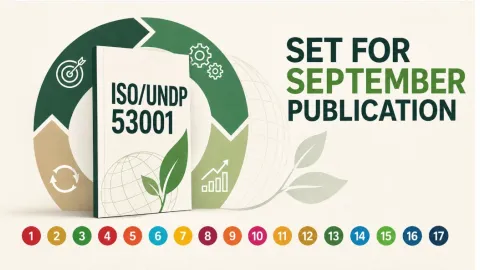
Upcoming ISO/UNDP 53001 Sets First Management System Requirements for the SDGs
ISO/UNDP 53001, set for publication in September 2026, will provide the first management system requirements specifically for organizations seeking to manage and improve their contribution to the Sustainable Development Goals (SDGs).
VDA Releases VDA 5.4 Draft for Fastening Measurement Tools
The Quality Management Center of the German Association of the Automotive Industry (VDA QMC) has released VDA 5.4, Interface for measuring tools in fastening technology, as a Yellow Volume for industry feedback.
ISO/CASCO Clarifies: ISO/IEC 17025 Does Not Require Labs to Treat Accreditation Bodies as Suppliers
The maintenance group of the International Organization for Standardization’s Committee on Conformity Assessment (ISO/CASCO) has clarified that ISO/IEC 17025:2017 does not require laboratories to treat their accreditation bodies as external service providers subject to the standard’s supplier controls.
JFS-C Standard Version 3.2 Gains GFSI Recognition Under 2024 Benchmarking Requirements
The Global Food Safety Initiative (GFSI) has recognized JFS-C Standard Version 3.2 from the Japan Food Safety Management Association (JFSM) against its 2024 Benchmarking Requirements.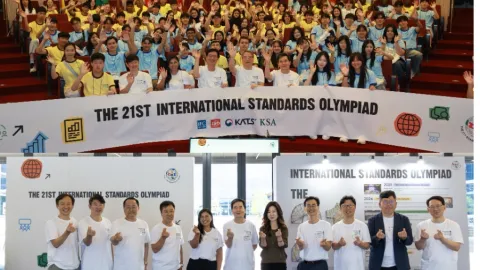
21st International Standards Olympiad Held in Korea
The 21st International Standards Olympiad brought together 105 middle-and high-school students from 11 countries in the Republic of Korea for a three-day competition and hands-on experience with international standardization.
ISO Environmental Management Committee Seeks Global Input for 2027-30 Plan
The International Organization for Standardization (ISO) Technical Committee 207 (ISO/TC 207), Environmental management, has launched a global consultation to help set its priorities for 2027-30.
DIS Ballot for ISO 30401 Knowledge Management Revision Closes September 17
ISO 30401, the international standard for knowledge management systems, is currently at the Draft International Standard (DIS) stage, with voting on the proposed second edition due to close September 17, 2026.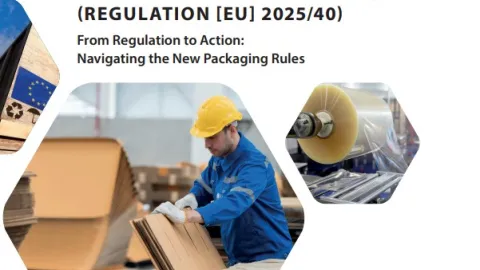
IFS Publishes PPWR White Paper and Launches Self-Assessment as EU Rules Take Effect
International Featured Standards (IFS) has published a new PPWR white paper and launched a self-assessment tool as the first requirements of the European Union’s Packaging and Packaging Waste Regulation (PPWR) took effect on August 12, 2026.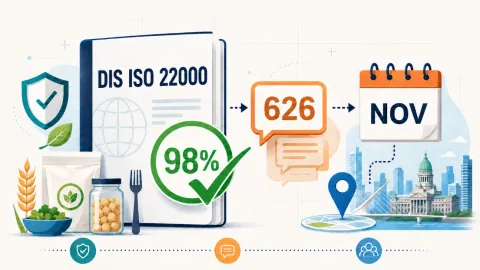
ISO 22000 Draft Approved With 98% Support, Comments Review Set for November
The revision of ISO 22000, the international standard for food safety management systems, has cleared its Draft International Standard (DIS) ballot with 98% positive votes.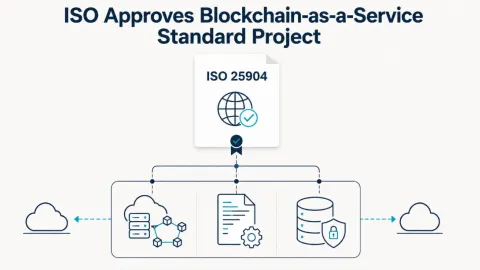
ISO Approves Blockchain-as-a-Service Standard Project
The International Organization for Standardization (ISO) has approved ISO 25904, a new standard project to establish a common technical framework and functional requirements for Blockchain-as-a-Service (BaaS) platforms.