
Management Systems World
All on Quality and other Standards in one place since 2010. Now Worldwide.
News Ecology / Energy / Chemistry
Please note that you have to be a registered member with paid membership in order to see full articles.
RegisterSelected News

New European Standard EN 16325 Expands Guarantees of Origin to All Energy Carriers
CEN and CENELEC have published EN 16325:2025 Guarantees of Origin related to energy, a new standard that increases transparency for consumers on where their energy comes from.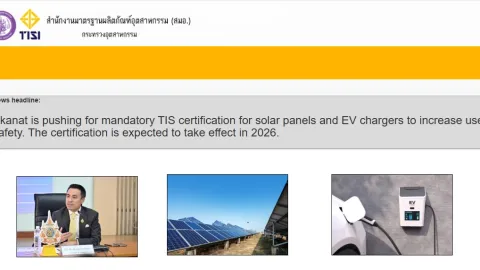
Thailand Preparing Mandatory Standards for Solar Panels and EV Chargers
Thailand is preparing to make solar panels and EV chargers subject to mandatory standards starting in 2026 to improve user safety.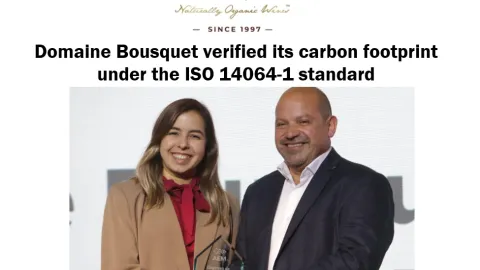
Domaine Bousquet Verifies Carbon Footprint With IRAM Under ISO 14064
Domaine Bousquet, a winery known for sustainable practices, has verified its organizational carbon footprint with IRAM under ISO 14064-1.
Korea Updates Excellent Recycling (GR) Product Certification Standards
The Korean Agency for Technology and Standards (KATS) has finalized revisions and new additions to the quality certification criteria for Excellent Recycling (GR) products.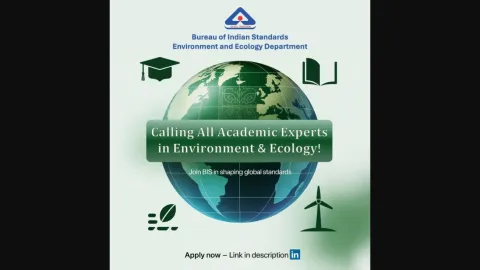
India Seeks Academic Experts to Shape Global Environment and Ecology Standards
The Bureau of Indian Standards (BIS) is inviting academic experts to join international technical committees on environment and ecology, through its Environment and Ecology Department.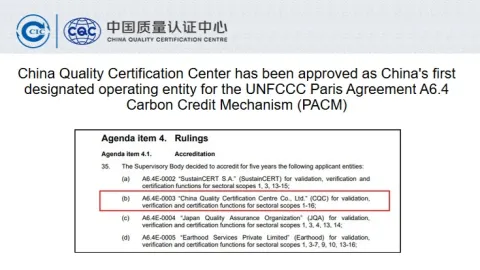
CQC Becomes First Chinese Body Approved for Paris Agreement Carbon Credit Mechanism
The China Quality Certification Centre (CQC) has become the first Chinese organization authorized to validate and verify international carbon reduction projects under the UNFCCC,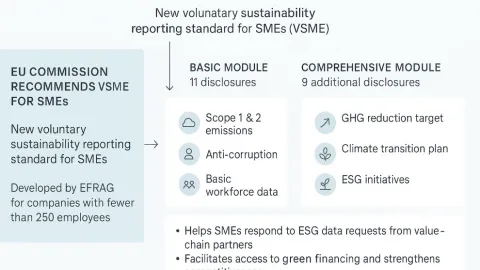
European Commission Adopts VSME Standard to Ease Sustainability Reporting for Small Companies
The European Commission, as part of its broader SME Relief Package, has adopted the VSME sustainability reporting standard for micro-, small-, and medium-sized enterprises (SMEs).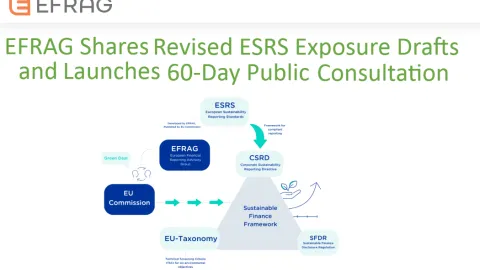
EFRAG Launches Consultation on Revised ESRS for Simpler Sustainability Reporting
The European Financial Reporting Advisory Group (EFRAG) has launched a 60-day public consultation on revised drafts of the European Sustainability Reporting Standards (ESRS).
Dutch Experts Wanted for European Standard on Climate Services
The Netherlands is helping develop Europe’s first standard on climate services, aimed at ensuring clear and dependable climate information across the continent.
Serbian Chamber of Commerce Launches National ESG Platform Powered by AI
The Serbian Chamber of Commerce and Industry (PKS) has launched ESGstandard,the country’s first national digital platform for environmental, social, and governance (ESG) self‑assessment and improvement.
Slovenia Offers Funding for Environmental and Sustainability Labels in Tourism Sector
Slovenia’s Ministry of the Economy, Tourism and Sport has launched a new call for applications to support hospitality and tourism businesses with the costs of obtaining or renewing internationally recognized environmental and sustainability labels.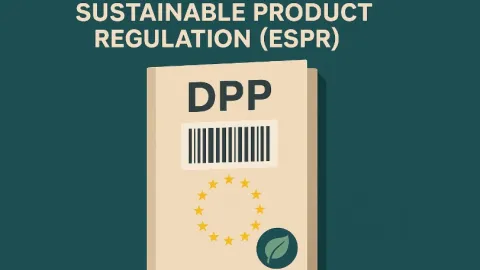
EU’s ESPR Sets Stage for Digital Product Passports, Repairability Rules and Phased Rollout
The European Union’s new Ecodesign for Sustainable Products Regulation (ESPR) took effect on July 18, 2024, setting the groundwork for far-reaching sustainability rules across nearly all products on the EU market.Global News
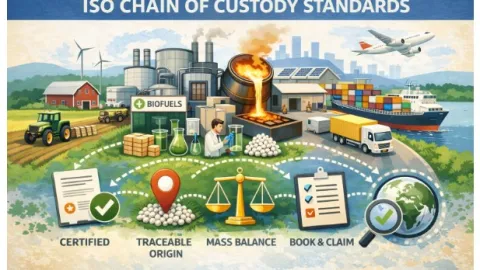
ISO 22095 Parts 2 And 3 Define Rules For Material Tracking Chain Of Custody Models
The International Organization for Standardization (ISO) has published ISO 22095-2 and ISO 22095-3, two new international standards that
CSR Labels and ISO 26000 Linked to Improved Business Performance
A new international study by Responsibility Europe finds that organizations using recognized CSR (corporate social responsibility) labels outperform others economically and organizationally, confirming the growing importance of CSR frameworks and ISO 26000 worldwide.
Work Begins on Two Agrifood Data System Standards
The International Organization for Standardization (ISO) has started work on two new international standards for agrifood data systems through ISO/TC 347, focused on crop data definitions and data exchange in greenhouse production.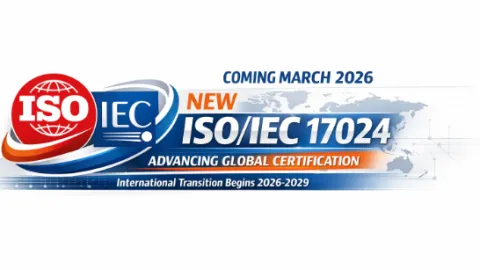
ISO 17024 Enters Final Publication Stage
The revision of ISO/IEC 17024, the international standard that sets requirements for bodies certifying persons, has entered its final publication stage, with release expected in March 2026.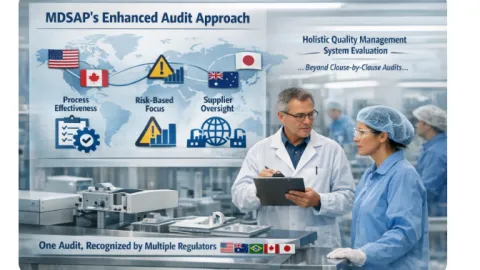
MDSAP Updates Audit Approach Toward Risk-Based Assessments
The Medical Device Single Audit Program (MDSAP) has updated its audit approach, marking a notable shift in how medical device manufacturers are evaluated across participating regulatory jurisdictions.
AIAG–VDA Release Harmonized SPC Yellow Volume for Automotive Industry
The Automotive Industry Action Group (AIAG) and the German Association of the Automotive Industry (VDA) have released a joint Statistical Process Control (SPC) Manual.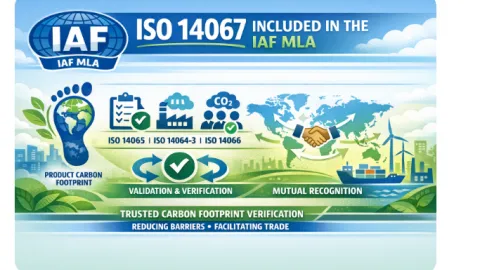
IAF Adds ISO 14067 Product Carbon Footprint To Its Multilateral Recognition Arrangement
The International Accreditation Forum (IAF) has decided to include ISO 14067 in its Multilateral Recognition Arrangement (IAF MLA), extending mutual recognition to
BRCGS Publishes FAQ For Packaging Materials Issue 7
BRCGS has released a new frequently asked questions (FAQ) document to support the implementation of the Global Standard Packaging Materials Issue 7.
GLOBALG.A.P. IFA Version 6 Audits Now Available for Combinable Crops and Plant Propagation Material
GLOBALG.A.P. has confirmed that audits are now available under Integrated Farm Assurance (IFA) version 6 for combinable crops and plant propagation material, two product categories within the IFA certification framework.
LEAF Updates Its Marque Standard With Version 17.0 For Sustainable Agriculture
LEAF (Linking Environment And Farming) has launched version 17.0 of the LEAF Marque Standard, introducing updated requirements for sustainable agriculture as the scheme continues to expand globally.
Revised ISO 2859-1 Brings Formal Skip-Lot Rules and New Curve Methods
The third edition of ISO 2859-1 has been published by the International Organization for Standardization (ISO), marking the first major revision of the international acceptance sampling standard in 27 years.