Management Systems World
All on Quality and other Standards in one place since 2010. Now Worldwide.
News
Please note that you have to be a registered member with paid membership in order to see full articles.
RegisterSelected News

Quality Drives U.S. Manufacturing Resilience, ZEISS Report Finds
A new U.S. Manufacturing Insights Report 2025 from ZEISS Industrial Quality Solutions reveals that 93% of American manufacturers view quality assurance as mission-critical to overcoming industry challenges and maintaining competitiveness.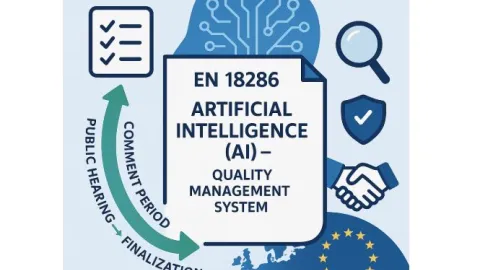
EU: Public Consultation Opens on EN 18286, First Standard Supporting the AI Act
The first European standard designed to support the European Union’s Artificial Intelligence Act (EU AI Act), EN 18286, has been released for public consultation.
France Makes Nutri-Score Labeling Mandatory, But Excludes Traditional Food Products
France’s National Assembly has approved a measure making Nutri-Score labeling mandatory on most food packaging, but excluding products with protected designations such as AOP, AOC, or IGP.
NATA Accreditation Can Help Australian Companies Meet France’s New Fast Fashion Law
France is introducing a new law to curb the environmental impact of fast fashion - low-cost, trend-driven clothing that is produced rapidly and often discarded after minimal use.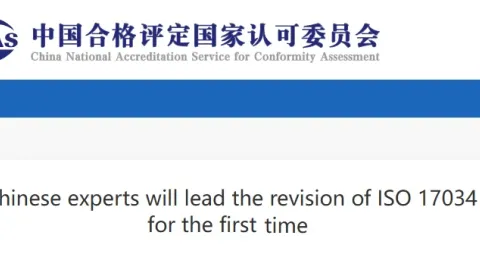
China to Lead ISO 17034 Revision for the First Time
Marking a historic first, Chinese experts will lead the revision of ISO 17034, the international standard defining general requirements for the competence of reference material producers.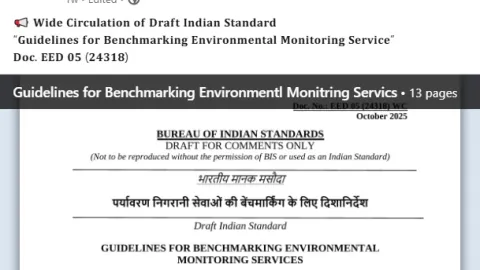
India Seeks Feedback on Draft Guideline for Environmental Monitoring Services
The Bureau of Indian Standards (BIS) has released a draft guideline that sets national criteria for comparing and improving the performance of organizations that monitor air, water, soil, and waste quality.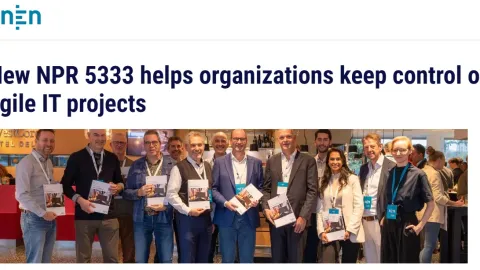
NEN Launches NPR 5333 to Improve Oversight of Agile IT Projects
The Netherlands Standardization Institute (NEN) has released NPR 5333:2025, a new guideline that helps organizations maintain control over agile-style IT development.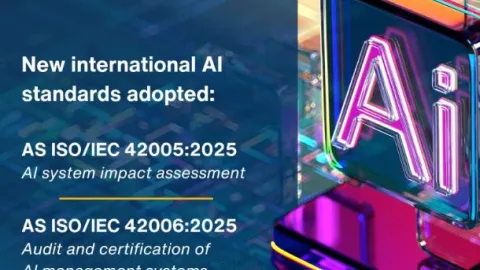
Australia Adopts ISO 42005 and ISO 42006 to Address AI Impacts and Audit Requirements
Standards Australia (SA) has adopted two international standards, ISO/IEC 42005 and ISO/IEC 42006, to help organizations assess the effects of artificial intelligence and ensure consistent auditing of AI management systems.
October Issue of AccrediaLetter Highlights New Anti-Corruption Certification
The October 2025 edition of AccrediaLetter, the monthly newsletter of Accredia,Italy’s national accreditation body, focuses on new developments in accredited certification and quality infrastructure.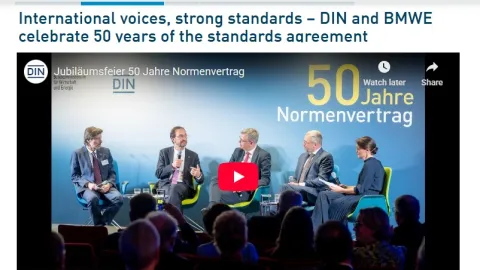
Germany Marks 50 Years of the National Standards Agreement
The German Institute for Standardization (DIN) and the Federal Ministry for Economic Affairs and Climate Action (BMWE) celebrated the 50th anniversary of the Standards Agreement on November 6 at DIN’s headquarters in Berlin.
Applications Open for Quality Austria’s 2026 Quality Awards
The call for entries is now open for the 2026 Quality Awards organized by Quality Austria and the Austrian Association for Quality (ÖVQ).