
Management Systems World
All on Quality and other Standards in one place since 2010. Now Worldwide.
News
Please note that you have to be a registered member with paid membership in order to see full articles.
RegisterSelected News
China Releases Standard for Zero Carbon Restaurant Construction and Operation
A new voluntary group standard for zero carbon restaurants has been officially released in China, providing technical requirements for their construction and operation.
ENAC Grants First Accreditations for EU ETS 2 Emissions Trading Regime
The Spanish National Accreditation Entity (ENAC) has granted the first accreditations for verifiers under the upcoming EU ETS 2 emissions trading regime, which will apply to buildings, road transport, and other sectors.
PT Adi Askara Bumi Earns Management System Certification Body Accreditation
PT Adi Askara Bumi, the internal certification body of the Pertamina Group, Indonesia’s state-owned energy company, has been accredited as a Man. Sys. Certification Body by the National Accreditation Committee (KAN).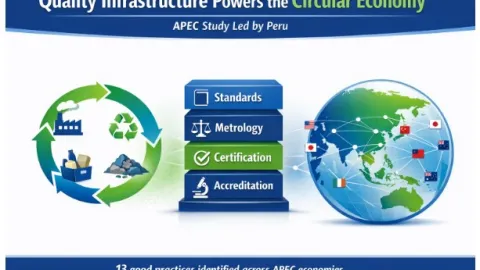
Peru Leads APEC Study on 13 Good Practices in Circular Economy Policies
A study led by Peru under the Asia-Pacific Economic Cooperation (APEC) framework has assessed 13 good practices related to circular economy policies and their use of quality infrastructure services.
BIS Invites Indian Experts to Shape ISO Environmental Standards Review
The International Organization for Standardization (ISO) has launched the systematic review of 12 environmental standards, and the Bureau of Indian Standards (BIS) is inviting Indian experts to help shape the country’s position in this international process.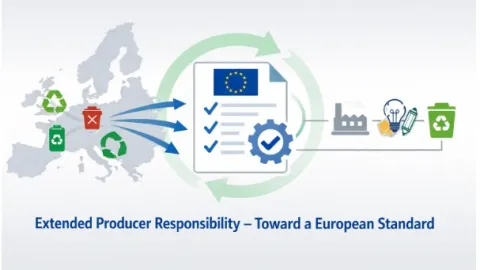
Europe Develops Standard on Extended Producer Responsibility (EPR)
The European Committee for Standardization (CEN) is developing a new standard on Extended Producer Responsibility (EPR) to align how producer responsibility systems are applied across EU countries and reduce barriers for companies operating in multiple markets.
SIST Invites Entrepreneurs to Free Seminar on Using Standards for Market Entry
The Slovenian Institute for Standardization (SIST) is hosting a free seminar to help entrepreneurs place products on the market with fewer risks and fewer barriers.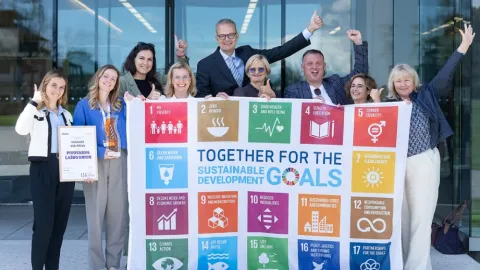
Pivovarna Laško Union Wins Two Sustainability Recognitions
Pivovarna Laško Union has been named ESG Champion of Slovenia 2025 and has also received a five star Green Star certificate, two national recognitions linked to its sustainability performance.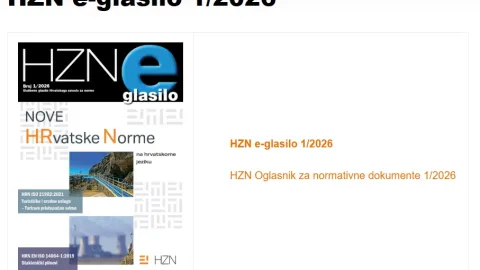
HZN First 2026 Newsletter Highlights Appointment of New Director
The Croatian Standards Institute (HZN) has released the first 2026 issue of issue of HZN e-glasilo, its official e-newsletter,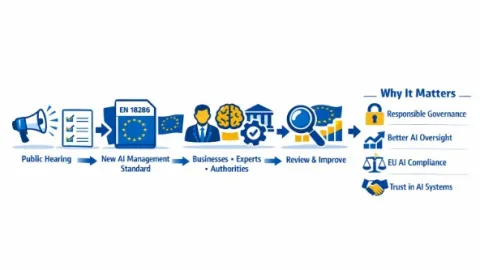
High Interest Across Europe As EN 18286 AI Management Standard Draws Over 1,000 Comments
A forthcoming European management system standard for artificial intelligence, EN 18286, aimed at quality management systems for high-risk AI systems, has attracted more than 1,000 comments during its public consultation.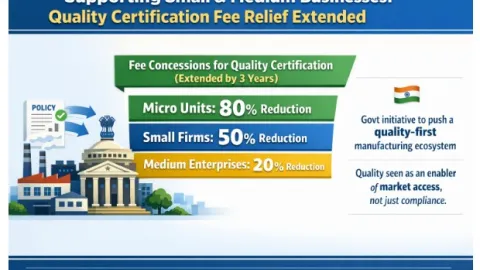
Indian Government Extends Quality Certification Fee Concessions For Small Firms By Three Years
India’s government will extend fee concessions for quality certification by three years to support small and medium enterprises and strengthen its manufacturing base.
China Launches Global AI Standards Library And Terminology Database
China has officially introduced a global artificial intelligence standards library and a global AI terminology database, consolidating key standards and definitions to support the development and coordination of AI standardization work.Global News

2025 World Expo in Japan Secures Certification for Integrating Sustainability in Event Planning
The Japan Association for the 2025 World Expo, the organizer of the event, has achieved ISO 20121 certification, a globally recognized standard for sustainable event management.
Fingerprinting Standard Updated as Biometrics Expand Globally
The ISO/IEC 29794-4 standard for finger image quality has been updated to ensure that biometric data remains relevant in today’s environment.
ILAC and IAF Merge to Form GLOBAC, Aiming to Harmonize Global Accreditation
On October 9th, the International Laboratory Accreditation Cooperation (ILAC) and the International Accreditation Forum (IAF) officially merged to create a new global accreditation body called GLOBAC.
Swiss Expert Interviewed on Transition to New Global Standard for Machinery Safety
ISO 13849, an international standard for the safety of machine control systems, is being updated to its new version, ISO 13849-1:2023.
Global Standardization Bodies Combine New Proposals in One Place for Easier Access
Three global standardization bodies, ISO, ITU-T, and IEC, have brought their latest Joint standard proposals together in one place.
New Information Security Certification Rules Trigger Global Transition
The launch of ISO/IEC 27006-1:2024 has triggered a transition for accredited certification bodies.
World Standards Day 2024 Celebrates Shared Vision for a Better World
On October 14th, the global community will celebrate World Standards Day, highlighting the role of international standards in creating a connected, secure, and sustainable world.
Forest Stewardship Council Opens Consultation on Accreditation Standards Revision
The Forest Stewardship Council (FSC) has launched a public consultation on the revision of its general accreditation standard and two related procedures.
GLOBALG.A.P. Primary Farm Assurance Version 6 Published with Six-Month Transition Period
The new version 6 of the Primary Farm Assurance (PFA) program by GLOBALG.A.P. was published on 11 September 2024 and will replace the previous version on 1 March 2025.
Swiss Stock Exchange Launches Climate Equity Flag for Environmentally Responsible Companies
SIX Swiss Exchange has introduced its new "1.5 °C Climate Equity Flag", an important step toward identifying companies that align with climate goals set out in the Paris Agreement.
Global Quality Infrastructure Index Report 2023 Released
The 2023 Global Quality Infrastructure Index (GQII), which ranks countries based on their quality infrastructure performance, was launched in May 2024.