Management Systems World
All on Quality and other Standards in one place since 2010. Now Worldwide.
Please note that you have to be a registered member with paid membership in order to see full articles.
Register
Certifications for EcoVadis Ratings Provide Evidence of Sustainability and Ethical Standards
Sustainability has become a central priority in today’s business world, driven by environmentally conscious consumers, investors, and regulatory demands, notes Sarah Alford of DQS in her blog post.
"Everybody-Just-Knows" Methodology Can Work, But Only on a Smaller Scale
Achieving quality without a formal system is possible but becomes increasingly challenging as the scale of operations grows, argues Michael Mills in Pragmatic Quality Blog.
ANAB Study Finds Limited Yet Emerging AI Use in Certification of Persons, Focus on Admin Tasks
The ANSI National Accreditation Board (ANAB) conducted a study on the use of Artificial Intelligence (AI) in certification of persons under ISO/IEC 17024, revealing limited but emerging adoption.
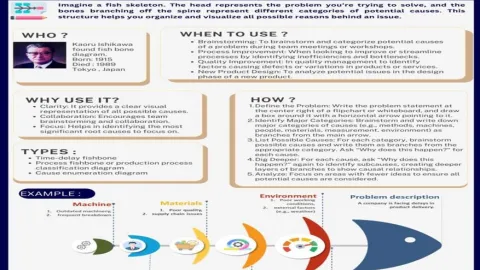
Reilhac Uses Ishikawa Diagram to Scan Root Causes of ISO 9001 Certification Credibility Issues
Jean-Marie Reilhac, founder of QleanRSE Consulting, has used the Ishikawa diagram to examine the root causes behind the loss of credibility in ISO 9001 certification.
How Communicating the Right Way Builds Quality Culture
A recent blog post by EU MDR Compliance emphasizes how effective communication can build a strong quality culture.
Concept of "Error" in ISO 9001, Explained
ISO 9001 does not speak about errors, but about non-conformities, as explained in a blog post by TÜV SÜD.
ISO 9001 Guards Against Dodging Responsibility Through Outsourcing
The Quality Management System standard ISO 9001 includes safeguards against companies sidestepping regulations by outsourcing questionable practices to external suppliers,
"The Standards Show" Explores Upcoming ISO Standard for Corporate Purpose
The new episode of "The Standards Show", hosted by Matthew Chiles of BSI, puts corporate purpose in focus.
Why Finances Are a Surprisingly Good Ally for Quality
Quality expert Ekaterina Potemkina shared her perspective on why finances are a crucial but often overlooked partner for quality efforts.
Risk Manager’s Love-Hate Dynamic With ISO 31000 and Why Love Prevails
Rajeev Thykatt explains in his blog why every risk manager has a love-hate relationship with the ISO 31000 standard.
ISO Management System vs. Conformity Assessment Standards: Introduction and Similarities
A blog post by ANAB is exploring the relationship between ISO Management System Standards and Conformity Assessment Standards.
ISO 9001 Revision Process Adrift: Navigating Rough Waters Ahead
The future of the ISO 9001 standard is adrift, claims Jean-Marie Reilhac in a blog post.
Recipe for a Future-Fit Lab: Genuine Improvements Over Quantity of Changes
Ensuring that your laboratory remains future fit is essential, as it is pointed out in a blog post by NATA.
Transform CAPA Into a Story for Better Results
Quality specialist Ekaterina Potemkina offers an original solution for making the CAPA process more successful: treat it like a story!
Why Compliance Alone Falls Short in Achieving Quality
Today, simply meeting compliance standards is no longer enough to stand out in a highly regulated market.
Why Formal Quality Management Does Not Work in Public Sector
Kai-Uwe Behrends argues in his commentary that formal quality management (QM) often fails in the public sector due to its rigid nature.
Five Steps to Prove Consideration in Quality Management
Michael Mills at Pragmatic Quality Blog explains how to prove consideration in quality management, sharing a five-step approach to demonstrate thoroughness.
14 Pointless Tasks Quality Managers Wish They Could Skip
Ekaterina Potemkina shared her opinion on tasks that quality managers often perform that don’t add real value.
Small Changes in Global Standards Can Boost Climate Awareness
In their opinion piece, Canadian scholars Graeme Auld and Stefan Renckens discuss how updates in global standards can impact climate awareness.
Six Effective Ways to Address Complaints About Quality
In her blog post, Ekaterina Potemkina, a quality expert at Fluent, addresses how to reduce complaints about quality within organizations.
Exploring False Accept and False Reject Decisions in Conformity Assessment
False accept and false reject decisions, two types of wrong measurement decisions, play a crucial role in conformity assessment, according to a personal opinion by famous metrologist, Jeff Gust.
ASQ Experts Share Insights on Top Quality Tools
The American Society for Quality (ASQ) compiled a list of the most popular quality tools and asked subject matter experts to provide overviews of the top five.
How to provide Supplier Quality Management when that one Supplier is a Monopolist
In his blog post, Mark Rogovoi raises concerns about being stuck with a sole supplier who shows no interest in collaboration, knowing there are no alternatives.